

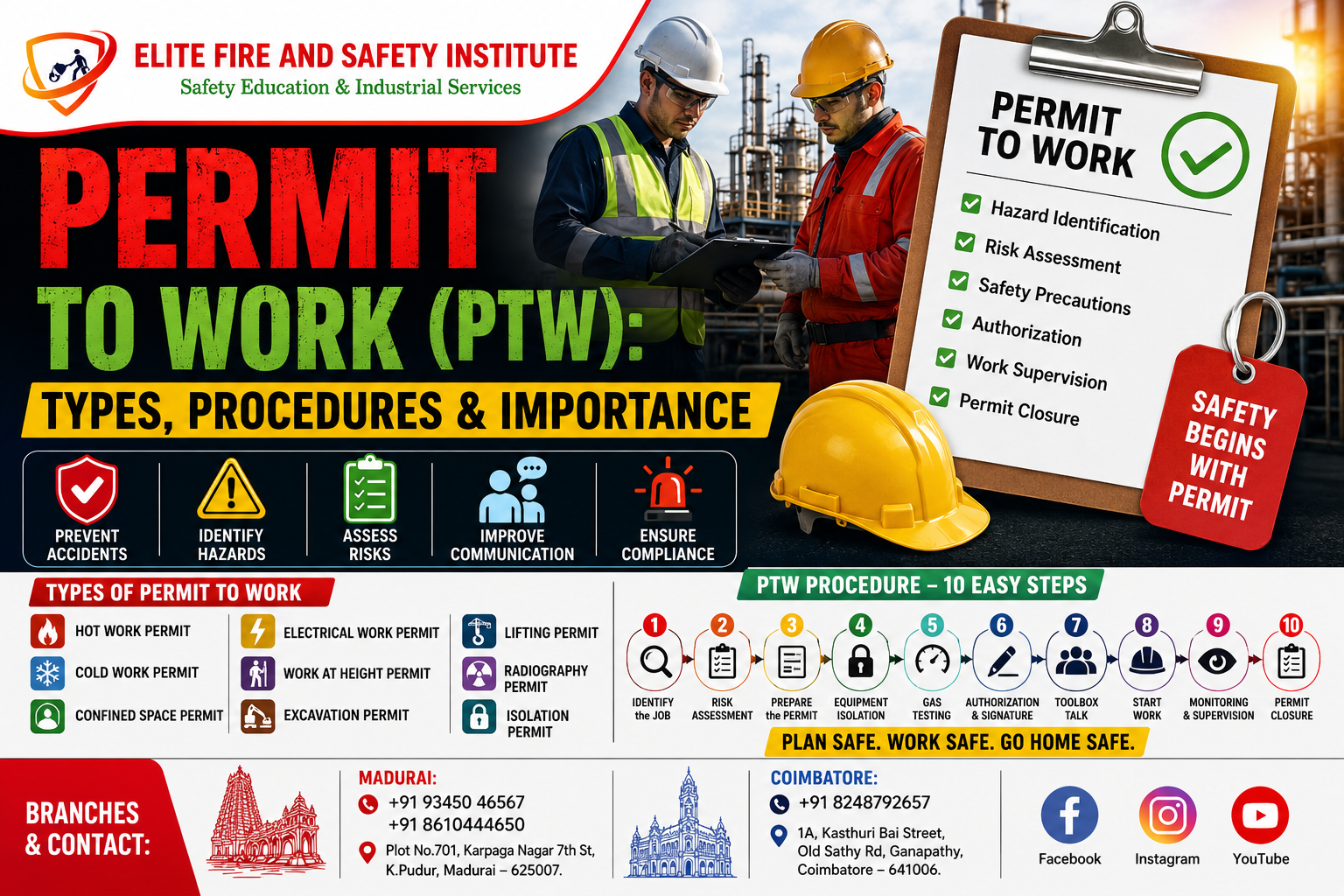
Permit to Work (PTW): Types, Procedures & Importance
Introduction
A Permit to Work (PTW) is a formal written system used to control high-risk work activities and ensure they are carried out safely. It is one of the most important safety management systems in industries such as oil and gas, construction, manufacturing, power plants, chemical industries, and offshore facilities.
Many major industrial accidents have occurred due to the absence or improper implementation of a Permit to Work system. Therefore, organizations worldwide follow PTW procedures as part of their Health, Safety, and Environment (HSE) management systems.
What is a Permit to Work (PTW)?
A Permit to Work is an official document that authorizes specific work to be carried out at a particular location for a specified period under controlled conditions.
It ensures that:
- Hazards are identified before work begins.
- Risks are assessed properly.
- Safety precautions are implemented.
- Responsibilities are clearly assigned.
- Emergency procedures are established.
- Work is completed safely.
A PTW is not merely a work authorization; it is a complete safety control system.
Importance of Permit to Work
1. Accident Prevention
2. Hazard Identification
3. Risk Assessment
4. Legal Compliance
5. Improved Communication
6. Emergency Preparedness
Types of Permit to Work
1. Hot Work Permit
2. Cold Work Permit
3. Confined Space Entry Permit
4. Electrical Work Permit
5. Work at Height Permit
6. Excavation Permit
7. Lifting Permit
8. Radiography Permit
9. Isolation Permit
Permit to Work Procedure
Step 1: Identify the Job
Determine:
- Nature of work
- Location
- Equipment involved
Step 2: Risk Assessment
Identify:
- Hazards
- Risk level
- Control measures
Step 3: Prepare the Permit
Include:
- Work description
- Date
- Time
- Responsible persons
- Required PPE
- Safety precautions
Step 4: Equipment Isolation
Isolate energy sources using:
- Lockout
- Tagout
- Blanking
- Disconnect switches
Step 5: Gas Testing
Required for:
- Hot work
- Confined spaces
Measure:
- Oxygen
- LEL
- Toxic gases
Step 6: Authorization
Permit signed by:
- Area Authority
- Safety Officer
- Performing Authority
Step 7: Toolbox Talk
Discuss:
- Hazards
- Responsibilities
- Emergency actions
Step 8: Start Work
Work begins only after approval.
Step 9: Monitoring
Continuous supervision ensures safety.
Step 10: Permit Closure
After work completion:
- Inspect area
- Remove tools
- Cancel permit
- Restore equipment
Responsibilities
Permit Issuer
- Verify hazards
- Approve permit
- Ensure safety controls
Permit Receiver
Understand permit conditions
- Follow procedures
- Use PPE
Safety Officer
- Conduct inspections
- Monitor compliance
- Stop unsafe work
Supervisor
- Guide workers
- Ensure permit validity
- Report hazards
Workers
- Follow permit instructions
- Wear PPE
- Report unsafe conditions
Essential Information in a PTW
A permit typically contains:
- Permit number
- Job description
- Work location
- Date and time
- Validity period
- Hazards identified
- Risk assessment
- PPE requirements
- Gas test results
- Isolation details
- Emergency contacts
- Signatures
- Permit closure section
Benefits of Permit to Work System
- Reduces accidents
- Protects workers
- Prevents equipment damage
- Improves communication
- Ensures compliance
- Enhances safety culture
- Reduces downtime
- Improves documentation
- Supports audits
- Increases operational efficiency
Common Mistakes in PTW
- Starting work without a permit
- Expired permits
- Incomplete hazard assessment
- Poor communication
- Skipping gas testing
- Improper isolation
- Unauthorized changes in work scope
- Lack of supervision
- Poor documentation
- Inadequate training
Best Practices
- Conduct detailed risk assessments.
- Ensure permits are issued only by authorized personnel.
- Verify all isolations before work starts.
- Perform gas testing where required.
- Conduct toolbox talks before each job.
- Monitor work continuously.
- Close permits immediately after work completion.
- Keep records for audits and investigations.
- Train employees regularly on PTW procedures.
- Periodically review and improve the PTW system.
Industries That Use PTW
- Oil & Gas
- Petrochemical Plants
- Construction
- Manufacturing
- Power Plants
- Marine & Offshore
- Mining
- Pharmaceuticals
- Food Processing
- Water Treatment Plants
Conclusion
A Permit to Work (PTW) system is an essential element of workplace safety that helps organizations manage hazardous tasks through proper planning, risk assessment, authorization, and supervision. By ensuring that all necessary precautions are in place before work begins, PTW significantly reduces the likelihood of accidents, injuries, equipment damage, and environmental incidents. An effective PTW system also strengthens communication, legal compliance, and the overall safety culture within an organization.
Role of Elite Fire and Safety Institute
Elite Fire and Safety Institute is dedicated to preparing students and working professionals for successful careers in the Health, Safety, and Environment (HSE) field through industry-focused education and practical training.
The institute supports learning in Permit to Work (PTW) systems by:
- Providing comprehensive training on PTW procedures and international safety standards.
- Teaching hazard identification, risk assessment, and safe work practices through classroom sessions and practical demonstrations.
- Offering hands-on exposure to permit documentation, Lockout/Tagout (LOTO), gas testing, confined space entry, hot work, and work-at-height safety.
- Training students in the proper use of personal protective equipment (PPE), emergency response, and incident prevention techniques.
- Delivering job-oriented HSE programs that align with industry requirements in sectors such as oil and gas, construction, manufacturing, and power generation.
- Assisting eligible students with placement support, interview preparation, and career guidance to improve employment opportunities in the safety profession.
By combining technical knowledge, practical skills, and career development support, Elite Fire and Safety Institute helps learners build the competence and confidence needed to implement Permit to Work systems effectively and contribute to safer workplaces.
Branches & Contact:
Madurai:
+91 93450 46567 +91 8610444650
Plot No.701, Karpaga Nagar 7th St, K.Pudur, Madurai – 625007.
Coimbatore:
+91 8248792657
1A, Kasthuri Bai Street, Old Sathy Rd, Ganapathy, Coimbatore – 641006.