


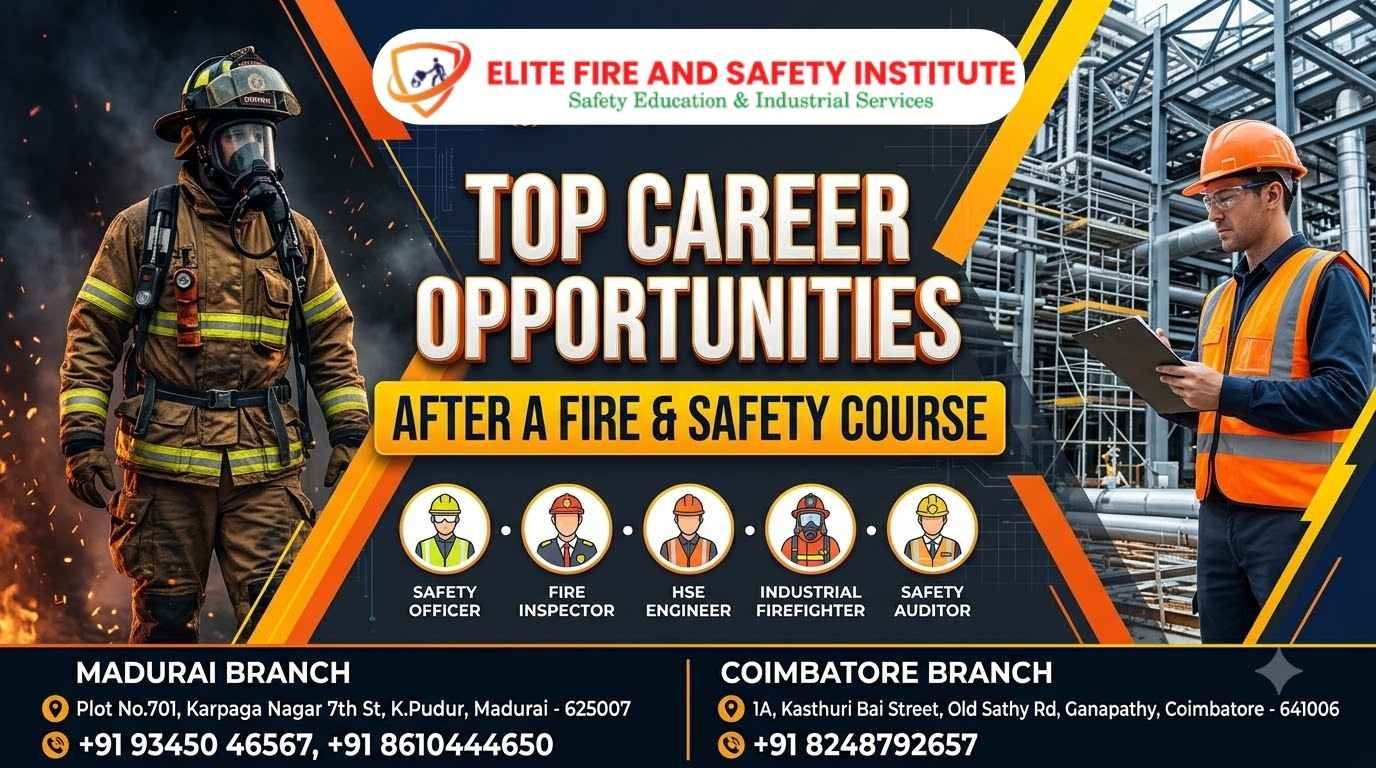
Top Career Opportunities After a Fire and Safety Course
Introduction
Fire and safety is a practical field focused on protecting people, property, equipment, and the environment. As workplaces become more complex, organisations need people who can recognise hazards, support safe working practices, and respond calmly when an emergency occurs. A fire and safety course can introduce learners to these responsibilities and help them decide which career direction suits their interests and qualifications. The right job depends on a person’s education, training, experience, communication skills, and the requirements of the employer.
1. Fire and Safety Officer
A fire and safety officer helps a workplace prevent incidents rather than simply react to them. Typical duties may include workplace inspections, identifying unsafe conditions, checking emergency equipment, maintaining safety records, supporting toolbox talks, and helping workers understand site procedures. The exact responsibilities vary between a factory, hospital, construction site, warehouse, or commercial building. Employers may require relevant qualifications, site experience, and additional training for particular industries.
2. Industrial Safety Assistant or Safety Supervisor
Industrial safety teams help ensure that everyday work is carried out in a controlled and organised way. Depending on the role and the candidate’s experience, tasks can include monitoring personal protective equipment (PPE), reporting unsafe acts or conditions, assisting with risk assessments, checking permits, and following up on corrective actions. A new entrant may begin in an assistant or trainee position and build competence through supervised field experience.
3. Firefighter and Emergency Response Team Member
Firefighting and emergency response roles require physical readiness, discipline, teamwork, and the ability to follow procedures under pressure. Depending on the employer, work may involve inspecting firefighting equipment, participating in drills, supporting evacuation, or responding to incidents. Candidates should check the specific recruitment requirements, medical standards, and recognised training expectations for each position. A general safety course alone may not meet every employer’s firefighter entry criteria.
4. Construction Safety Personnel
Construction sites change from day to day as workers, machinery, materials, and work activities move around the project. Safety personnel may help monitor work at height, lifting operations, electrical hazards, excavation, housekeeping, and the use of PPE. Knowledge of site induction, hazard reporting, and permit-to-work procedures can be useful. Employers often value candidates who can communicate clearly with workers and contractors, not just identify problems.
5. Safety Roles in Manufacturing, Logistics, and Healthcare
Factories and warehouses may need support with machine guarding, chemical storage, material handling, fire prevention, and emergency arrangements. Hospitals and other healthcare facilities have their own challenges, including evacuation planning, oxygen-related hazards, electrical safety, and coordination with clinical teams. The skills required differ by workplace, so candidates should study the job description carefully and learn the hazards relevant to their chosen sector.
6. Environmental, Compliance, and Specialist Pathways
With further education and experience, professionals may move towards environmental health and safety, auditing, training, emergency planning, or specialist risk-control roles. Some positions require additional qualifications, sector-specific certificates, or experience with management systems and legal requirements. Candidates should verify that a course or certificate is accepted by the employers and locations they are targeting.
How to Improve Your Employability
Build a foundation in hazard identification, risk assessment, incident reporting, fire prevention, evacuation procedures, and safe work practices. Practise writing clear inspection observations and explaining a hazard in simple language. Learn to use common workplace documents such as checklists, toolbox-talk records, and incident reports. Practical exercises, supervised site exposure, communication skills, and a professional CV can make a candidate more prepared for interviews.
How Elite Fire and Safety Institute Can Support Learners
When comparing training providers, ask about the syllabus, trainer experience, practical demonstrations, assessment methods, certificate details, and career guidance. Elite Fire and Safety Institute can be presented to prospective learners as a place to explore fire and safety training options and build foundational knowledge. Applicants should confirm the current course details, eligibility, fees, certificate recognition, and any placement-related terms directly with the institute before enrolling.
Conclusion
A fire and safety course can be a starting point for several career pathways, but employment is not automatic. Candidates improve their prospects by choosing training that matches their goal, developing practical skills, understanding industry hazards, and applying for roles that fit their qualifications. A steady commitment to learning and safe behaviour is essential for long-term progress in this field.
Branches & Contact:
Madurai:
+91 93450 46567 +91 8610444650
Plot No.701, Karpaga Nagar 7th St, K.Pudur, Madurai – 625007.
Coimbatore:
+91 8248792657
1A, Kasthuri Bai Street, Old Sathy Rd, Ganapathy, Coimbatore – 641006.