

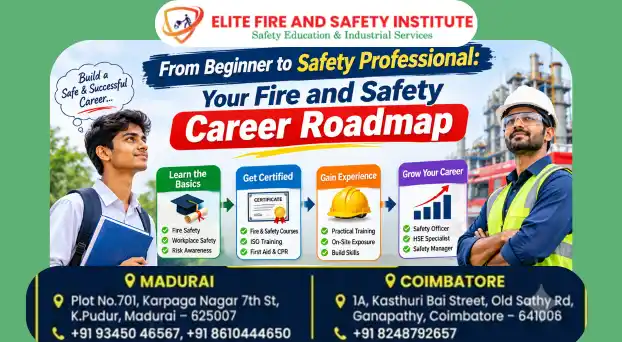
From Beginner to Safety Professional: Your Fire and Safety Career Roadmap
A step-by-step plan for learning, gaining experience, and progressing responsibly
Introduction
A career in fire and safety is built through learning, practice, and consistent professional behaviour. New learners may find the range of course names and job titles confusing, especially when training advertisements promise rapid career progress. A simple roadmap can help you decide what to learn first, how to gain relevant experience, and when additional qualifications may be useful. Progress will differ according to education, employer needs, and the industry chosen.
Step 1: Identify Your Starting Point
Write down your current education, work experience, language skills, location preferences, and financial limits. Decide whether you are exploring a first job, changing careers, or improving skills for a current role. Then choose one or two target job titles to research. This prevents you from spending money on courses that do not match your immediate goal.
Step 2: Research Real Job Requirements
Read current job advertisements from employers in the industry you want to enter. Record the qualifications, experience, technical skills, and certificates requested. Notice the difference between trainee positions and roles that require independent responsibility. If vacancies repeatedly ask for site experience, plan how you might gain supervised experience rather than assuming another short course will replace it.
Step 3: Choose Suitable Foundational Training
Compare training providers by syllabus, trainer background, practical activities, assessment, certificate issuer, and total fees. Ask for written details about the course and verify any claims of approval or recognition. Training should help you understand hazards and controls, fire prevention, emergency arrangements, risk assessment, PPE, and reporting. Make sure the programme is appropriate for your entry level and career target.
Step 4: Practise Core Workplace Tasks
Use training exercises to practise inspecting an area, identifying hazards, preparing a basic risk assessment, delivering a short toolbox talk, and writing an incident or near-miss report. These activities help convert theory into usable skills. When practical site exposure is available, follow the supervisor’s instructions, use required PPE, and never attempt a task beyond your training or authorisation.
Step 5: Prepare a Credible CV
Create a concise CV that lists education, relevant courses, practical experience, technical skills, and languages. Describe what you actually did during training or work placements, without exaggerating responsibilities. Keep certificate copies and experience letters organised. Prepare interview examples that show observation, communication, teamwork, and willingness to report hazards honestly.
Step 6: Apply Strategically and Learn From Feedback
Apply for roles that match your current eligibility, including trainee or assistant positions where appropriate. Tailor your CV to the job description and prepare questions about duties, supervision, working hours, location, safety responsibilities, and training. If you do not receive an offer, identify the gap—such as experience, communication, or a specific technical skill—and address it with a practical plan.
Step 7: Build Experience and Specialise
Once employed, learn the site procedures, applicable rules, reporting lines, and hazards of your sector. Keep a record of training and professional development. After gaining a solid foundation, consider specialist areas such as construction safety, emergency response, auditing, environmental management, or industrial risk control if they align with your interests and employer requirements. Verify the entry conditions for any advanced programme.
Step 8: Review Progress Regularly
Every few months, review the roles you can now perform, the feedback you have received, and the skills still missing. Ask a supervisor or experienced professional for constructive guidance where possible. Keep certificates current when refresher training is required, and stay alert to changes in equipment, procedures, and relevant standards. Long-term growth comes from competence and dependable conduct, not from collecting certificates alone.
Where Elite Fire and Safety Institute Fits
Elite Fire and Safety Institute can be one of the training providers you explore while planning your first steps. Contact the institute for current course details, eligibility, practical training arrangements, fees, and certificate information. Compare the information with your chosen job requirements and verify any recognition claims before enrolling. Treat career guidance and placement-related services according to the specific written terms provided.
Conclusion
A realistic career roadmap begins with a clear target and grows through appropriate training, practical skills, honest applications, and experience. You do not need to plan every stage at once. Choose the next useful step, verify your options, and review your progress regularly. In safety work, trust is earned by competence, clear communication, and consistent attention to protecting people.
Branches & Contact:
Madurai:
+91 93450 46567 +91 8610444650
Plot No.701, Karpaga Nagar 7th St, K.Pudur, Madurai – 625007.
Coimbatore:
+91 8248792657
1A, Kasthuri Bai Street, Old Sathy Rd, Ganapathy, Coimbatore – 641006.