

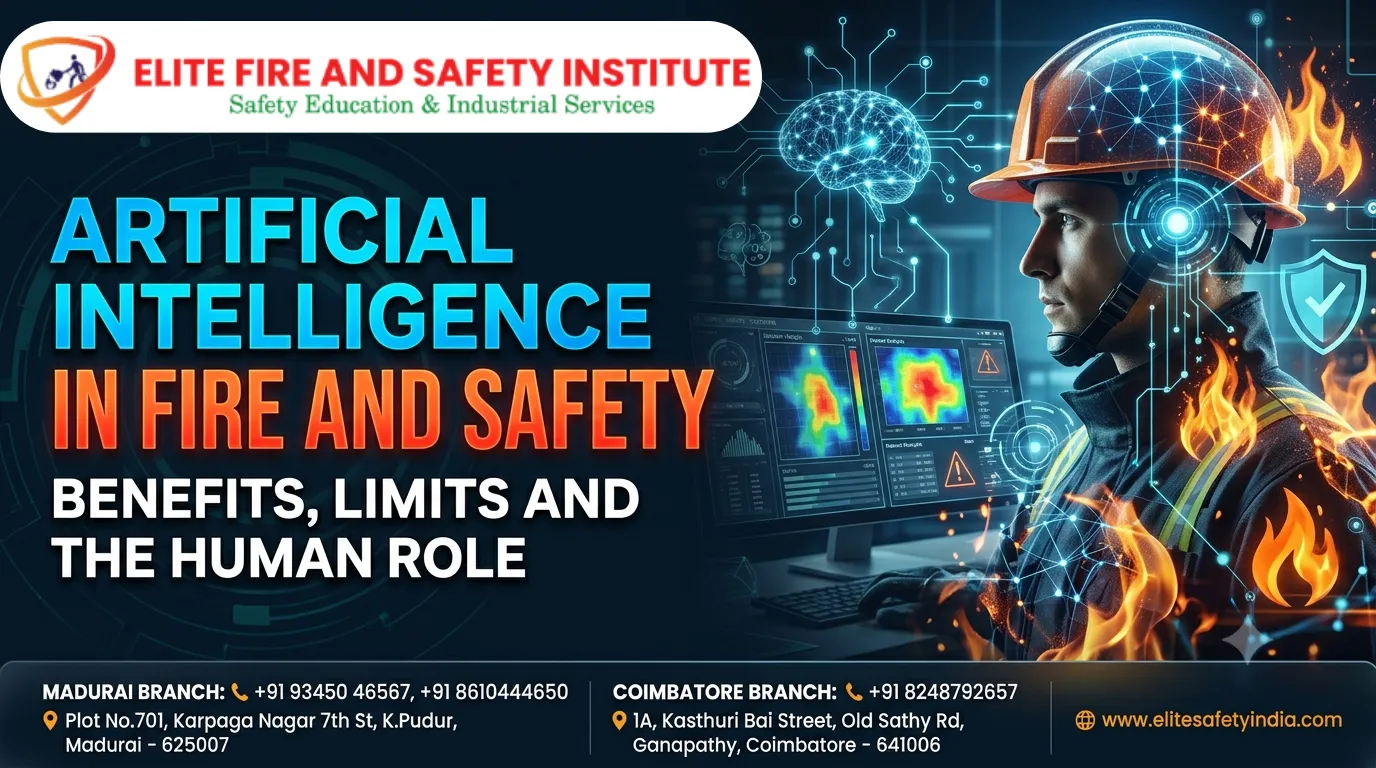
Artificial Intelligence in Fire and Safety: Benefits, Limits and the Human Role
Introduction
Artificial intelligence (AI) is increasingly used to analyse data, identify patterns and support decisions. In fire and workplace safety, it may help organisations detect unusual conditions, prioritise inspections and learn from incident trends. Yet AI is not a substitute for competent safety professionals, reliable equipment or emergency procedures. Its value depends on the quality of data, the design of the system and the way people use its results.
Potential Uses in Fire Detection
Some systems use video analytics or connected sensors to identify visible smoke, flames or unusual temperature patterns. These tools may provide earlier warnings in suitable environments, but performance can vary with lighting, dust, steam, camera position and the type of hazard. AI-assisted detection should be evaluated against the applicable requirements and must not replace required certified fire alarm and detection systems unless the solution is formally approved for that purpose.
Predictive Maintenance
Equipment generates information about temperature, vibration, operating cycles and faults. Analytics can help identify patterns that suggest a pump, motor or other component may need attention. Maintenance teams can use these signals to plan inspections, but alerts need verification. Poor sensors, missing data or changing operating conditions can lead to false alarms or missed problems.
Smarter Safety Inspections
Digital tools may help organise inspection checklists, compare observations over time and flag repeated issues such as blocked exits or overdue corrective actions. Mobile reporting can make it easier for workers to submit photographs and hazard reports. However, automated classification may misread an image or overlook context, so competent personnel should review important findings.
Learning from Incident Data
AI tools can analyse large collections of incident and near-miss reports to find recurring patterns. This may help identify common locations, tasks or times associated with risk. Results are only as reliable as the data. Under-reporting, inconsistent categories and biased records can distort conclusions. Organisations should protect personal information and avoid using analytics to unfairly blame individual workers.
Benefits for Safety Teams
Potential benefits include faster review of large data sets, better prioritisation, more consistent records and improved visibility of recurring problems. Automation may reduce repetitive administrative work and allow safety professionals to spend more time in the workplace. These gains should be measured rather than assumed, using clear performance indicators and real-world testing.
Risks and Limitations
AI can produce false positives, miss rare hazards or behave differently when the environment changes. Systems may be vulnerable to cyberattacks or depend on unreliable connectivity. Employees may also over-trust automated recommendations. Organisations should define who makes final decisions, how errors are reported, how data is protected and what happens if the system fails.
Keep Humans in Control
Safety-critical decisions need accountable people, clear procedures and fallback arrangements. AI alerts should be checked against site conditions and established emergency protocols. Workers must still know how to raise alarms, evacuate and report hazards if digital systems are unavailable. Testing should include realistic conditions and involve the people who will use the system.
Skills for Future Safety Professionals
Future practitioners may benefit from digital literacy, data interpretation, knowledge of sensor limitations and the ability to explain technology to workers. Traditional skills remain essential: hazard recognition, communication, practical inspections, risk assessment and emergency planning. Training providers can help learners understand both the promise and the limits of new tools.
Conclusion
AI can strengthen fire and workplace safety when it supports, rather than replaces, sound safety management. Organisations should evaluate systems carefully, protect data, verify results and retain human accountability. At Elite Fire and Safety Institute, students can enquire about fire and safety training that builds the fundamentals needed to assess workplace hazards and emerging technologies responsibly.
Branches & Contact:
Madurai:
+91 93450 46567 +91 8610444650
Plot No.701, Karpaga Nagar 7th St, K.Pudur, Madurai – 625007.
Coimbatore:
+91 8248792657
1A, Kasthuri Bai Street, Old Sathy Rd, Ganapathy, Coimbatore – 641006.