

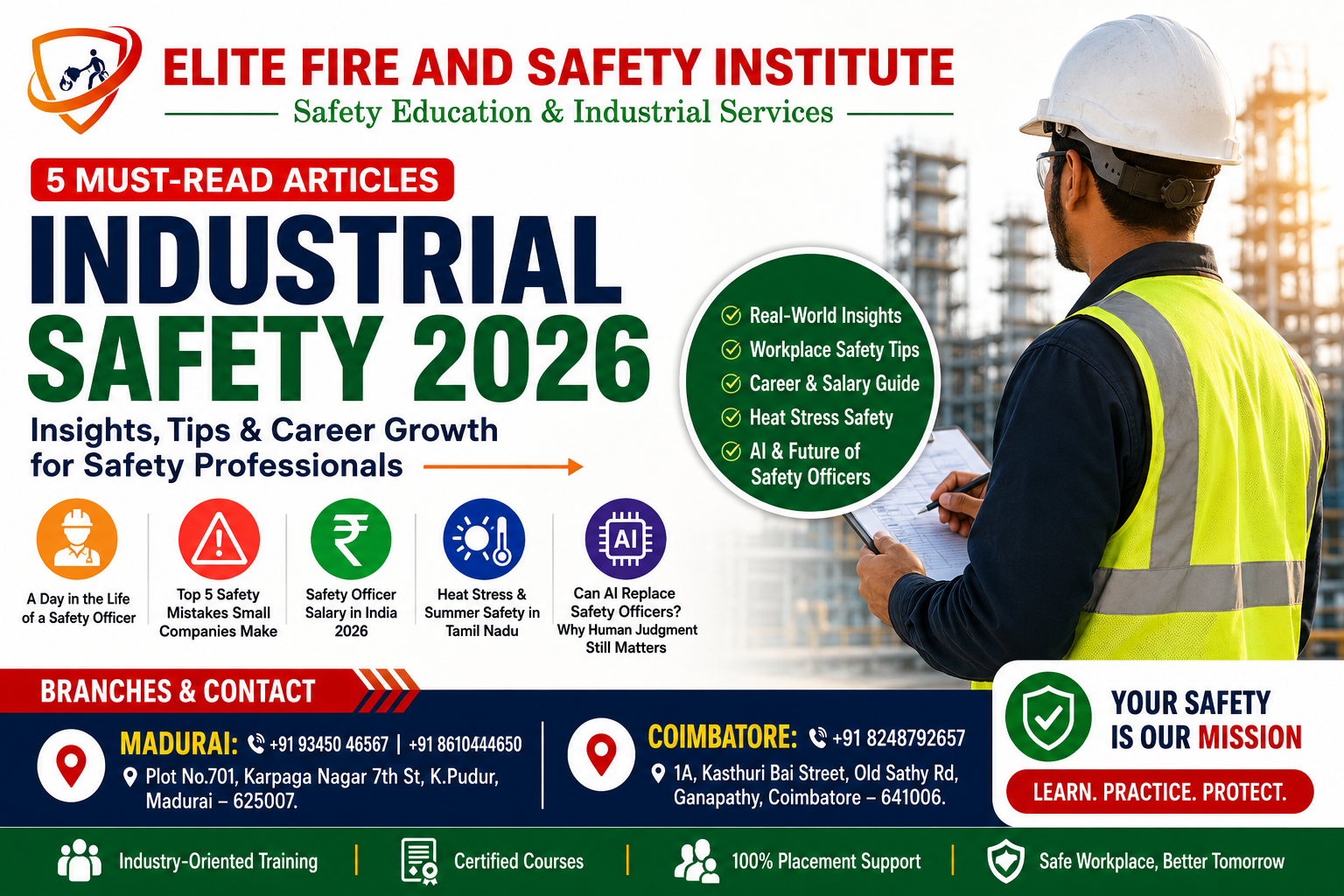
A Day in the Life of a Safety Officer
Most people think a safety officer’s job is just walking around with a checklist, ticking boxes. Honestly, it’s a lot more than that. The day usually starts before the first shift even begins — checking fire extinguishers, walking the floor, making sure PPE stations are stocked, and looking for anything that changed overnight. A loose cable here, a blocked exit there — small things that can turn into big problems if nobody catches them.
Once the workers come in, the real job starts. You’re not just enforcing rules, you’re convincing people why the rules matter. Someone always thinks the harness is “too much trouble” for a five-minute job. That’s where experience counts — knowing when to push back and when to explain, not just order. A good safety officer spends half the day talking to people, not filling forms.
Then there are the unexpected moments — a near-miss report, a machine acting up, a contractor who doesn’t know the site protocols. You end up solving problems on the spot, often with limited information and zero time to think it through slowly. It’s high-pressure work, but it’s also deeply satisfying when you see a shift end with zero incidents because you caught something early.
This is exactly the kind of practical, real-world training that Elite Fire and Safety Institute focuses on. Textbook knowledge is important, but knowing how to read a site, read people, and react calmly under pressure — that’s what separates a good safety officer from a great one. Students at Elite Fire and Safety Institute get hands-on exposure to these real scenarios, not just classroom theory, so when they step onto an actual site, it doesn’t feel unfamiliar.
If you’re thinking about a career in industrial safety, spend a day shadowing someone in the field before you decide. It’ll tell you more than any brochure — and institutes like Elite Fire and Safety Institute often help arrange exactly that kind of exposure for students.
Top 5 Safety Mistakes Small Companies Make (Is Your Company Making Them Too?)
Big factories usually have dedicated safety teams and budgets to match. Small and medium businesses? Not always. And that’s where most of the accidents actually happen — not in the massive plants with strict audits, but in the smaller units where safety quietly takes a back seat to production targets.
1. Blocked fire exits. It sounds basic, but it’s shockingly common.
Boxes, machinery, or extra stock piled up near an emergency exit “just for now” — until it’s not “for now” anymore and there’s a fire.
2. No PPE, or PPE that’s just for show.
Helmets and gloves bought once and never replaced. Workers using damaged gear because nobody’s tracking condition or expiry.
3. Untrained workers on machinery.
New hires put straight onto equipment with a two-minute explanation, because training takes time the company doesn’t want to spend.
4. No proper documentation.
No incident logs, no near-miss reports, nothing to learn from. The same mistake happens again and again because nobody wrote down what went wrong the first time.
5. Skipping regular safety audits.
Safety checks only happen when an inspector is expected, not as routine practice.
The frustrating part is that fixing most of these doesn’t cost much — it just needs someone who knows what to look for. This is why more small business owners are now sending even one or two staff members for proper safety training, at places like Elite Fire and Safety Institute, instead of waiting for a serious accident to force the issue. A single trained safety-conscious employee on the floor can catch problems long before they become headlines.
If you run a small business, take an honest look around your workspace today. Chances are, at least one of these five mistakes is sitting there right now — and it’s cheaper to fix it now than after something goes wrong.
Safety Officer Salary in India 2026 — How to Earn More
If you’re considering a career in industrial safety, the money question comes up fast — and fair enough. Here’s a realistic picture of where things stand in 2026.
A fresher with a basic diploma in industrial safety can expect somewhere around ₹15,000 to ₹25,000 a month, depending on the industry and location. It’s not huge starting money, but it climbs quickly with experience and the right certifications. A safety officer with 3-5 years of experience, especially in sectors like oil & gas, construction, or manufacturing, can be looking at ₹35,000 to ₹60,000 a month. Senior safety managers and HSE heads in large industrial plants or MNCs can cross ₹1 lakh a month, sometimes well beyond that.
Sector matters a lot here. Oil & gas and petrochemical companies generally pay the highest, simply because the risk level is higher and compliance requirements are stricter. Construction pays decently too, especially with big infrastructure projects going on across the country. Manufacturing tends to be more moderate but offers steady, long-term roles.
So how do you actually earn more? Certifications are the biggest lever. A basic diploma gets your foot in the door, but adding advanced certifications — fire and safety specializations, international-standard courses, or advanced HSE training — genuinely moves the needle on both salary and job opportunities, including openings abroad in the Gulf countries, which pay significantly more.
This is where choosing the right training institute matters. At Elite Fire and Safety Institute, the courses are structured specifically to build the kind of practical, industry-recognized skill set that employers actually pay more for — not just a certificate to frame on the wall.
Bottom line: the safety field rewards people who keep upskilling. Start with a solid diploma, get real site experience, and keep adding certifications. The salary graph in this field genuinely goes up with effort.
Heat Stress & Summer Safety — Protecting Factory Workers in Tamil Nadu
Summer in Tamil Nadu isn’t just uncomfortable — for workers on factory floors, construction sites, and outdoor work areas, it can genuinely be dangerous. Temperatures regularly cross 38-40°C in cities like Madurai, Trichy, and Coimbatore during peak summer months, and indoor factory floors near furnaces or machinery can feel even hotter.
Heat stress creeps up quietly. It starts with fatigue and excessive sweating, then moves to dizziness, cramps, and in serious cases, heat stroke — which is a genuine medical emergency. The tricky part is that workers often push through the early symptoms because they don’t want to be seen as “unable to handle the job,” and that’s exactly when things get dangerous.
The fixes aren’t complicated, but they need to be enforced consistently, not just written in a policy document somewhere. Scheduled hydration breaks every hour, not just when someone remembers to ask. Shifting the heaviest physical work to early morning or evening hours where possible. Proper ventilation and, where budgets allow, cooling zones near high-heat work areas. And most importantly, training supervisors to actually recognize early symptoms of heat exhaustion in their team, instead of just noticing when someone collapses.
Oral rehydration solutions, easy access to drinking water, and simple things like breathable uniforms make a bigger difference than people expect. Companies that take this seriously see fewer sick days and fewer accidents overall — tired, dehydrated workers make more mistakes, heat aside.
This is a topic Elite Fire and Safety Institute covers seriously in its training programs, because heat-related incidents are still under-reported compared to fire or machinery accidents, even though they’re just as preventable. Local, seasonal risks like this often get less attention than they deserve, simply because they build up slowly instead of happening all at once.
If you’re managing a workforce this summer, don’t wait for a heat-related incident to take this seriously. A few basic changes to your work schedule and hydration policy can prevent it entirely.
Can AI Replace Safety Officers? Why Human Judgment Still Matters
AI is showing up everywhere in industrial safety these days — smart CCTV systems that flag someone not wearing a helmet, sensors that predict when a machine is about to fail, wearables that track a worker’s fatigue levels in real time. It’s genuinely useful technology, and it’s only going to get more common. But the question a lot of people are asking now is: does this mean safety officers themselves become unnecessary?
Not really, and here’s why. AI is excellent at pattern recognition — spotting a missing helmet in a video feed, or flagging unusual vibration data from a machine. What it can’t do is understand context the way a human can. A safety officer walking the floor notices things a camera never will — a worker who seems distracted because of something happening at home, a subtle tension between a supervisor and a new hire that could lead to corners being cut, or a gut feeling that something about today’s shift just feels off. None of that shows up in sensor data.
There’s also the human side of emergency response. When something actually goes wrong — a fire, a chemical spill, an injury — it’s a person who has to make split-second calls, calm down a panicking team, and adapt to a situation that no algorithm was trained on because it’s never happened exactly that way before. AI can support decision-making with data, but it can’t take responsibility, and it definitely can’t build trust with a workforce.
This is really the mindset behind training at Elite Fire and Safety Institute — treating AI and automation as tools that make a safety officer’s job easier, not as replacements. Students are taught to actually use this technology, read the data it produces, and combine it with sound human judgment on the ground.
The future of industrial safety isn’t AI versus humans. It’s AI handling the constant monitoring and data crunching, while trained safety professionals handle the judgment calls, the human interactions, and the split-second decisions that keep people safe. That combination is what actually works.
Safety Officer Salary article
→ Diploma in Fire & Industrial Safety Management
→ ADIS Course
→ NEBOSH IGC
→ Safety Training
→ Contact / Admission
Branches & Contact:
Madurai:
+91 93450 46567 +91 8610444650
Plot No.701, Karpaga Nagar 7th St, K.Pudur, Madurai – 625007.
Coimbatore:
+91 8248792657
1A, Kasthuri Bai Street, Old Sathy Rd, Ganapathy, Coimbatore – 641006.