Essential Skills Every Safety Officer Must Develop – Career Guide
Essential Skills Every Safety Officer Must Develop Technical knowledge and people skills for safer workplaces Introduction A safety officer needs...
Read More


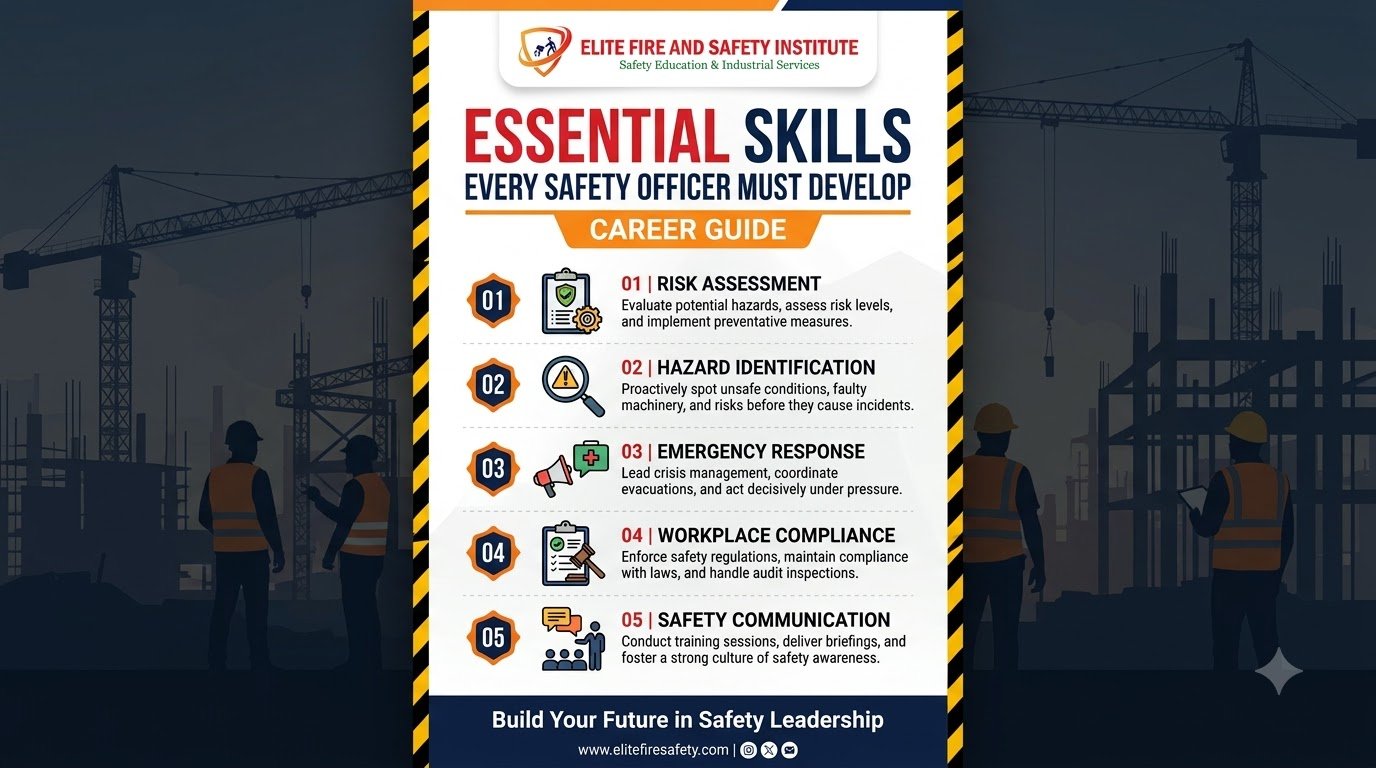
Essential Skills Every Safety Officer Must Develop Technical knowledge and people skills for safer workplaces Introduction A safety officer needs...
Read More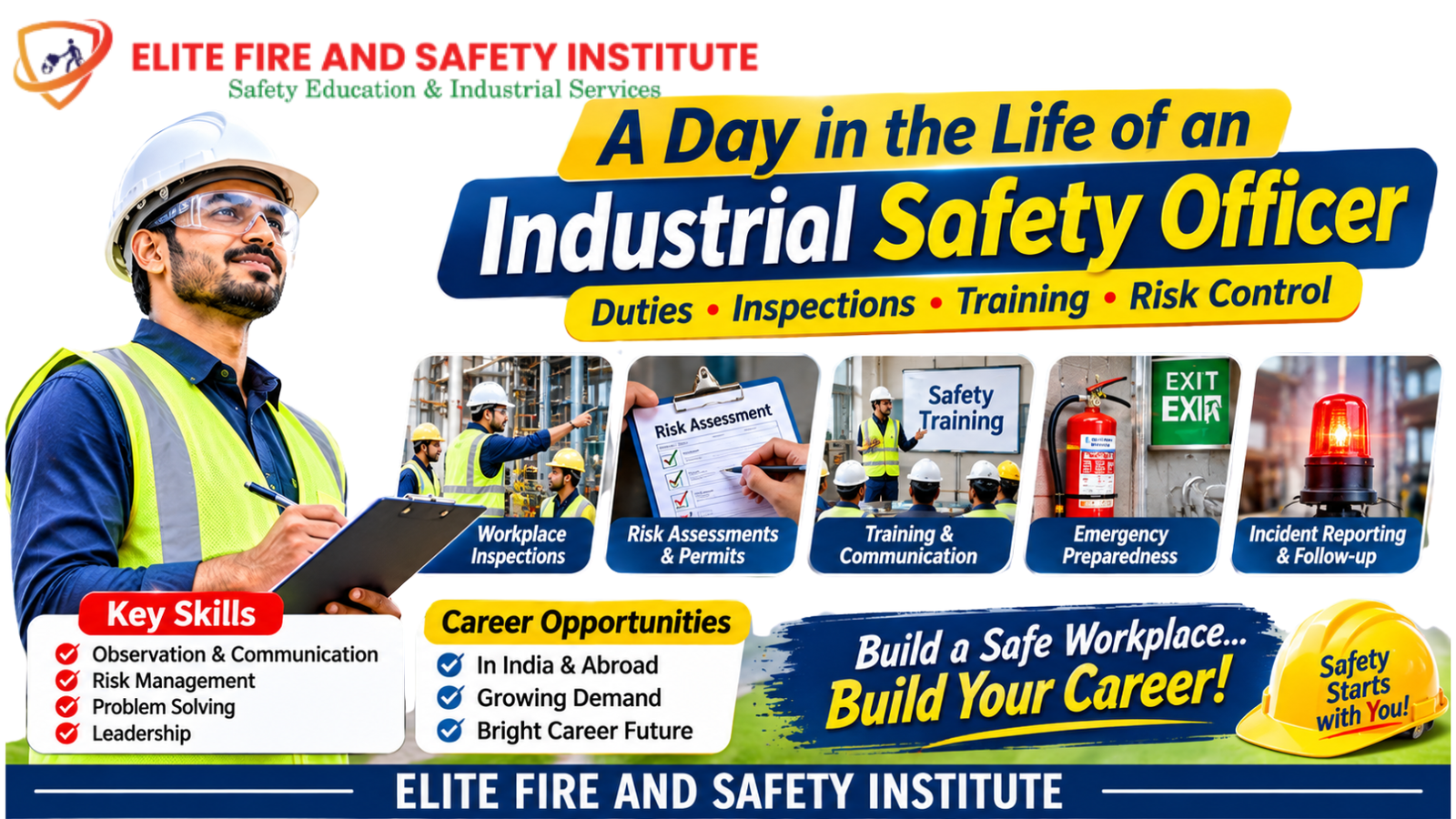
A Day in the Life of an Industrial Safety Officer How inspections, communication, and follow-up help control workplace risks Introduction...
Read More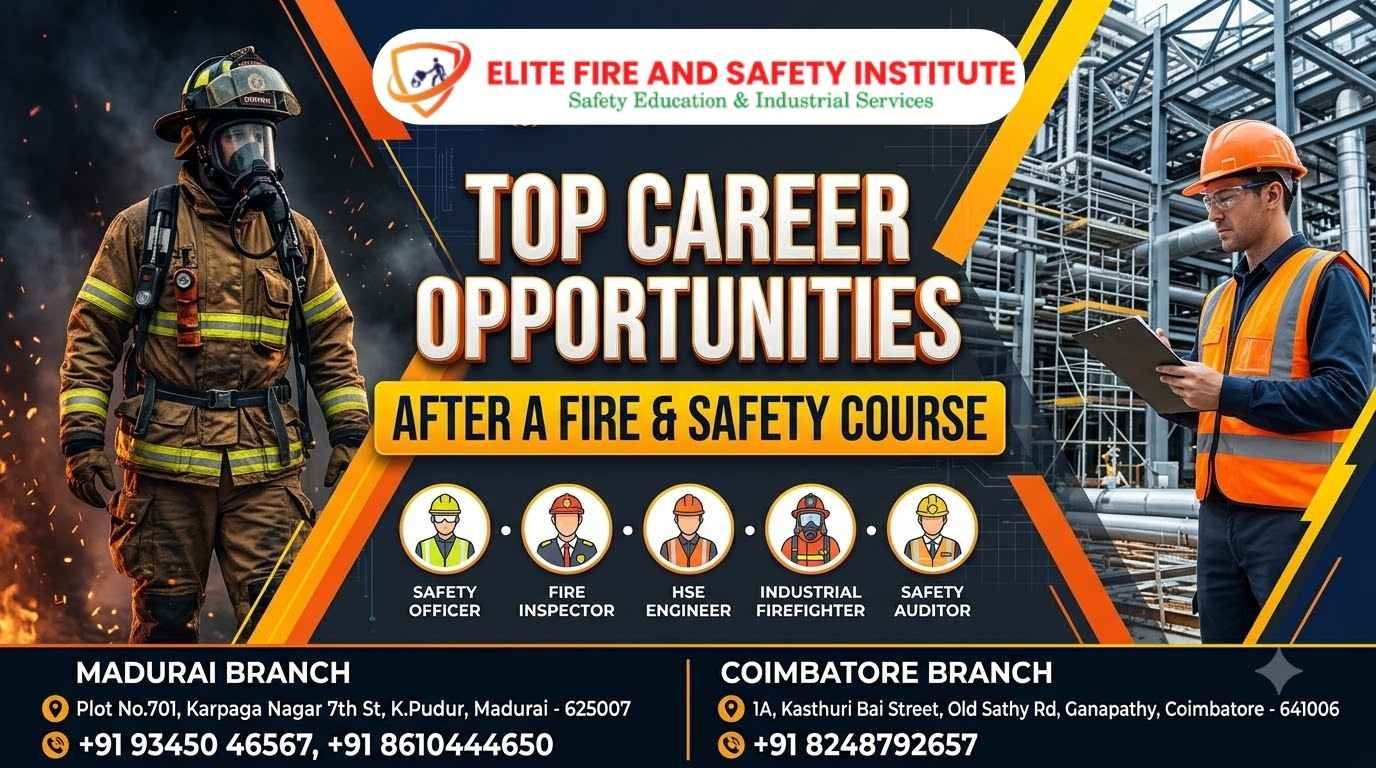
Top Career Opportunities After a Fire and Safety Course Introduction Fire and safety is a practical field focused on protecting...
Read More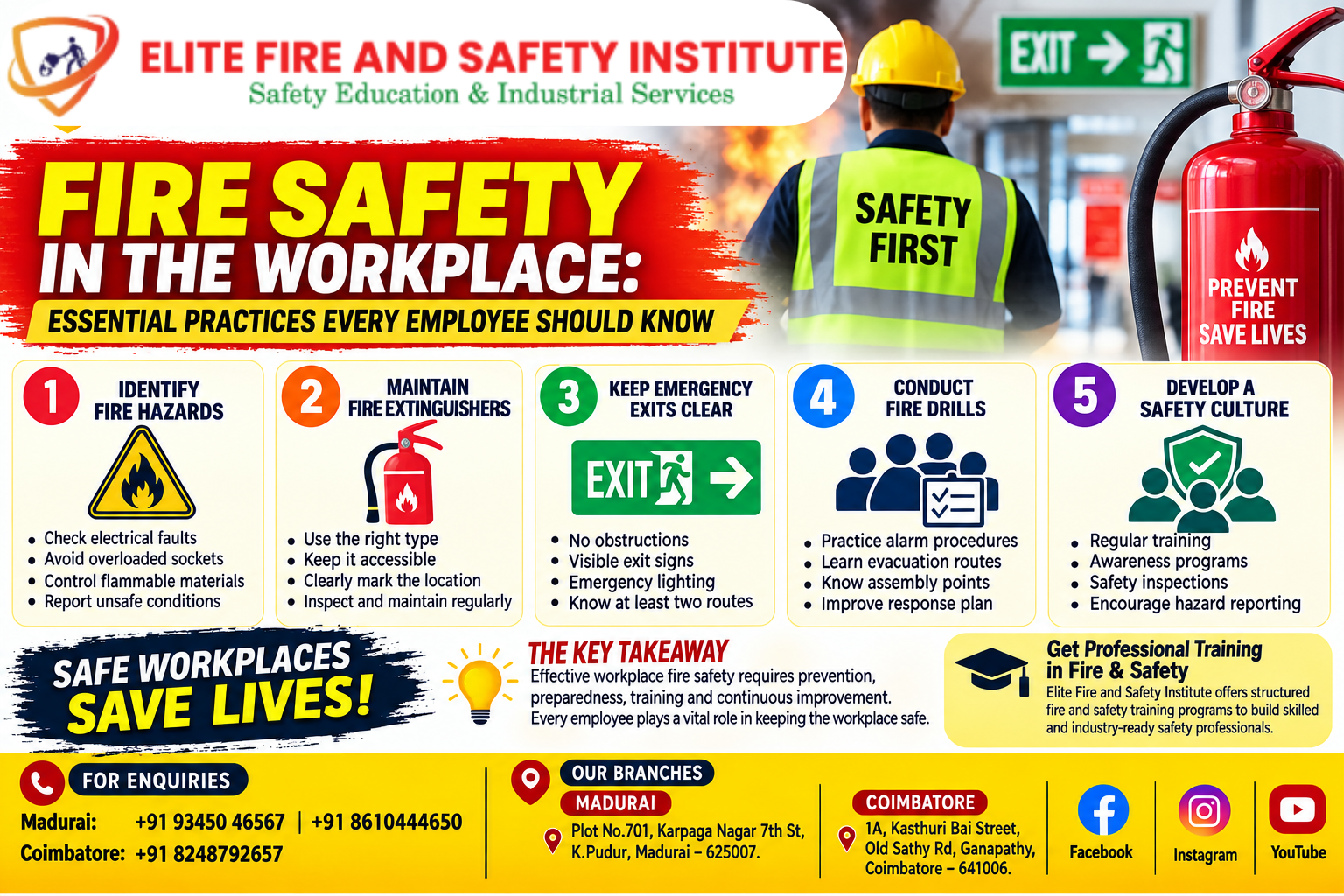
Fire Safety in the Workplace: Essential Practices Every Employee Should Know Fire safety is an essential part of every workplace,...
Read More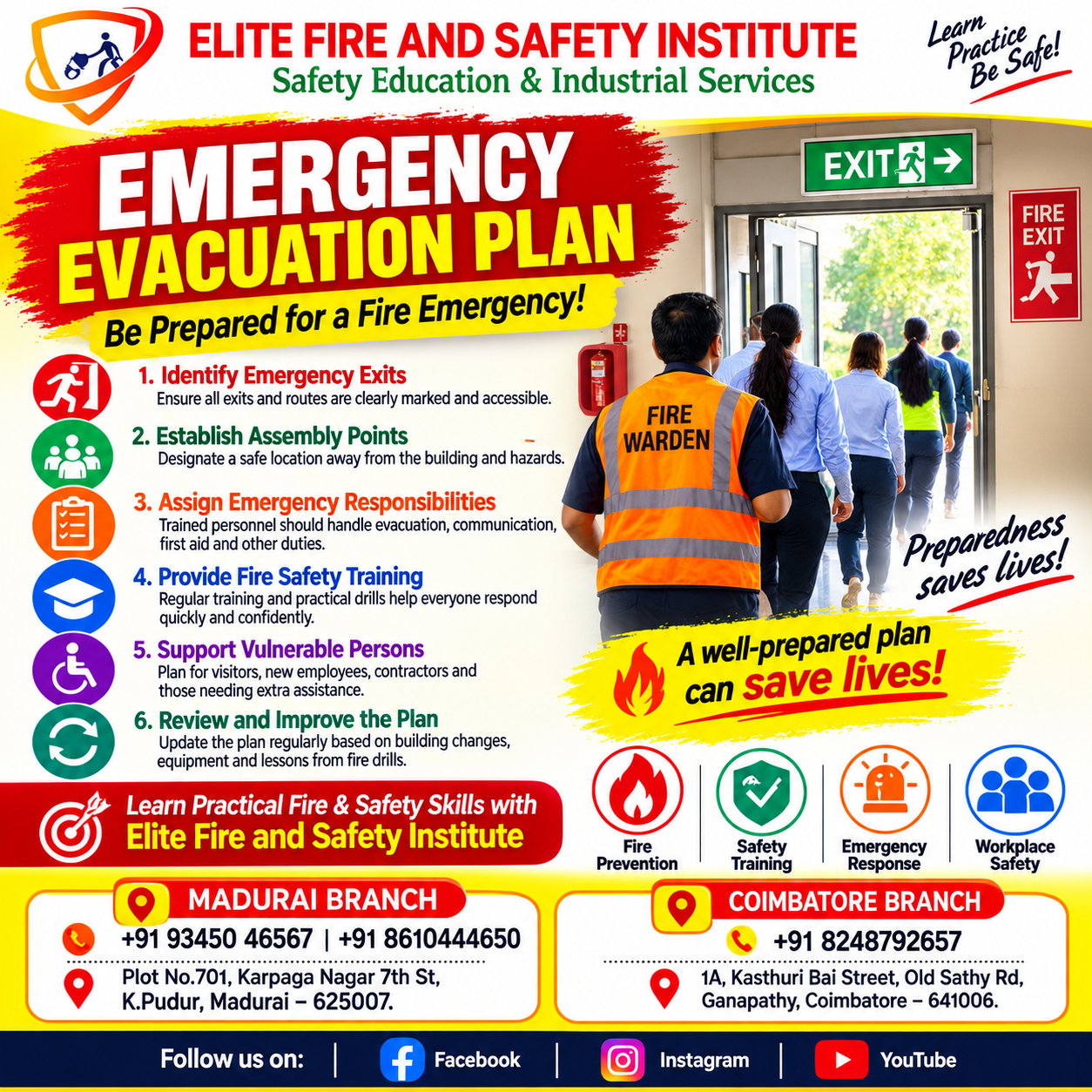
For students and professionals seeking practical knowledge in fire prevention, emergency response, and workplace safety, Elite Fire and Safety Institute provides structured fire and safety training designed to build industry-relevant skills.
Read MoreKitchen Fire Safety: Preventing Oil and Grease Fires Kitchen fires are among the most common types of fires in homes,...
Read More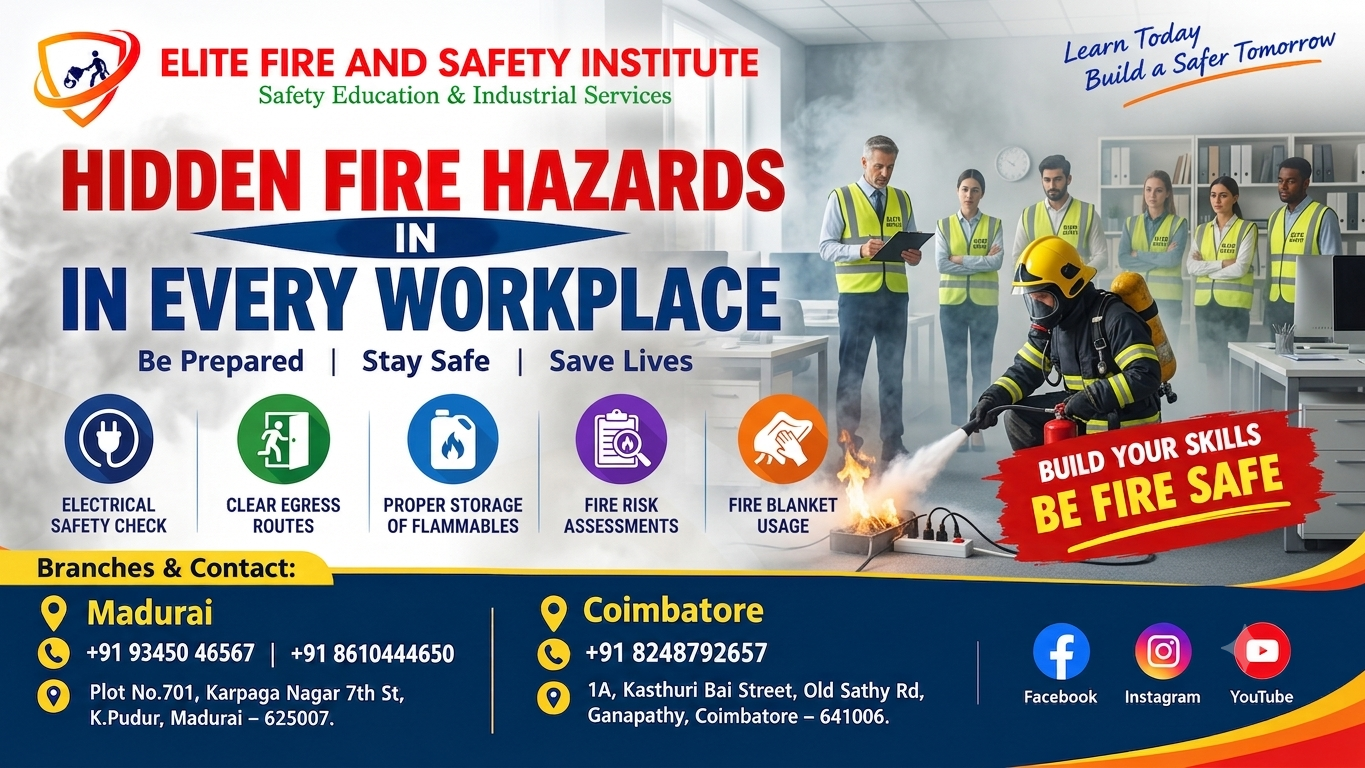
The Hidden Fire Hazards in Every Workplace When people think about workplace fires, they often imagine major accidents involving chemicals,...
Read More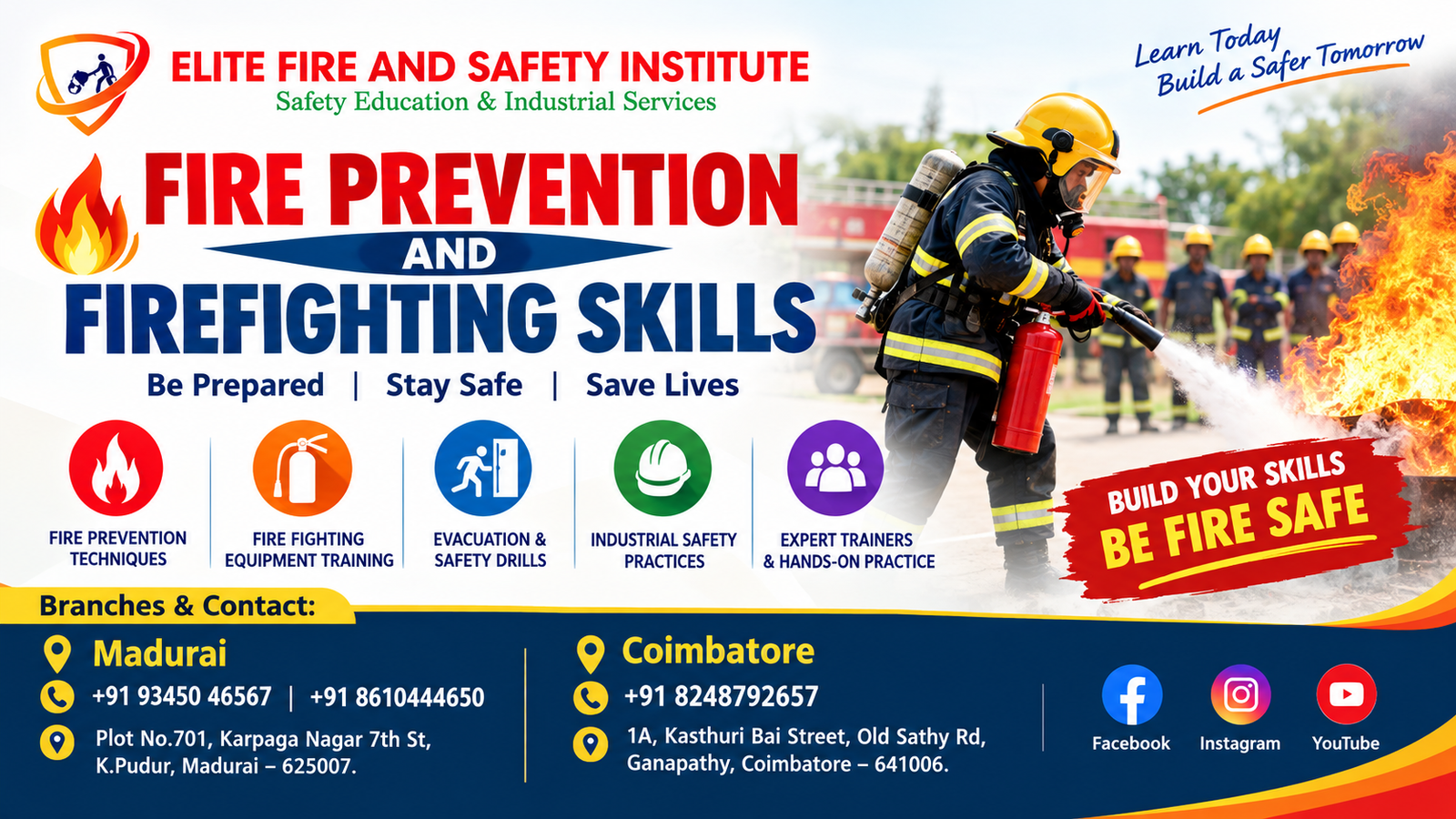
Fire Prevention and Firefighting Skills The role of a Safety Officer has changed significantly. Modern workplaces are becoming more technologically...
Read More
The right qualification depends on the country and job position. Candidates may consider: • Diploma or degree-level education relevant to the field • NEBOSH qualifications • IOSH qualifications • OSHA training • ISO management-system qualifications • Industry-specific safety training • First aid and emergency-response training
Read More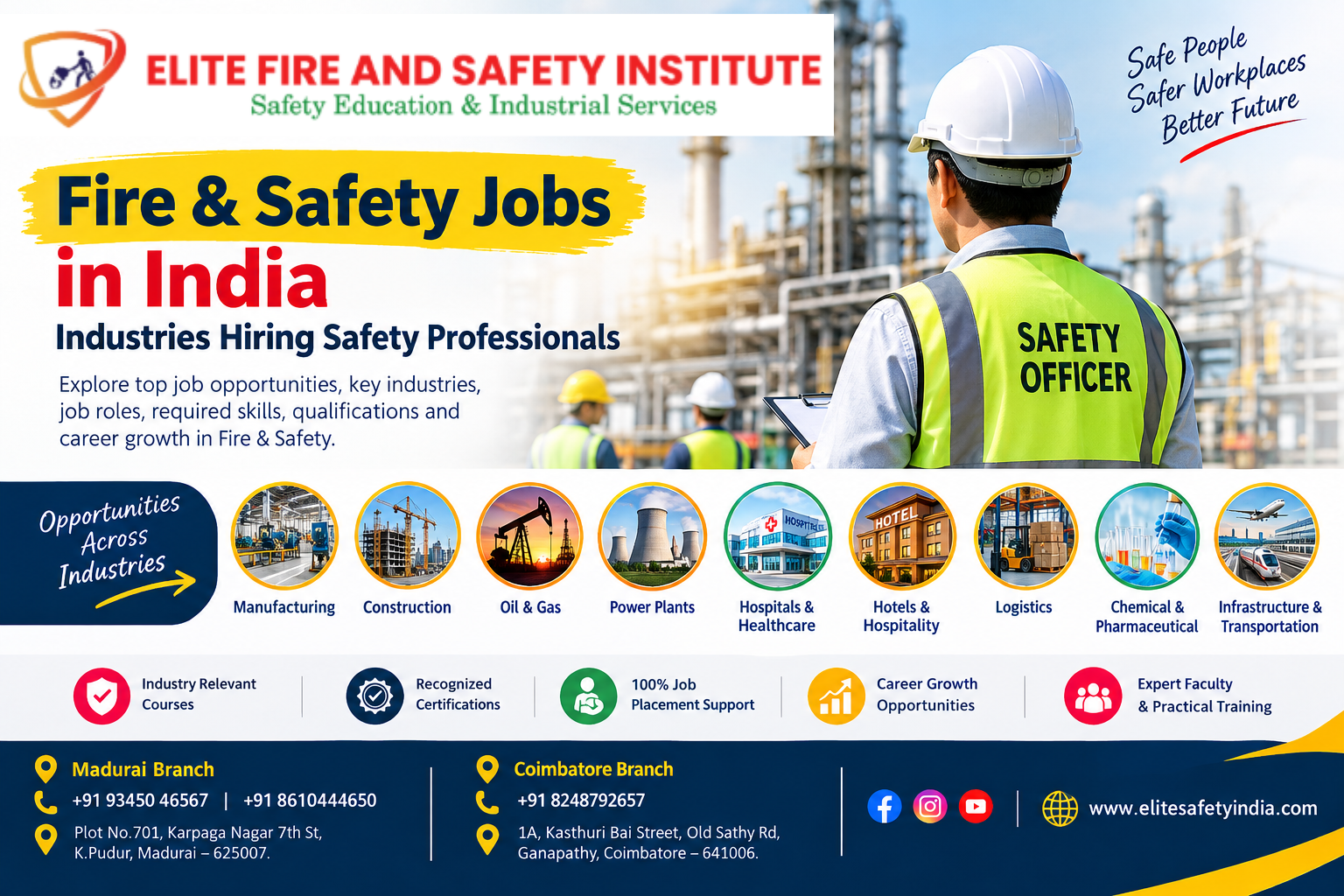
Industrial accidents, fires, chemical hazards, electrical risks, and other workplace emergencies can cause serious damage to people and property. Companies therefore require qualified professionals who can identify hazards, implement preventive measures, conduct inspections, and respond effectively to emergencies.
Read More