


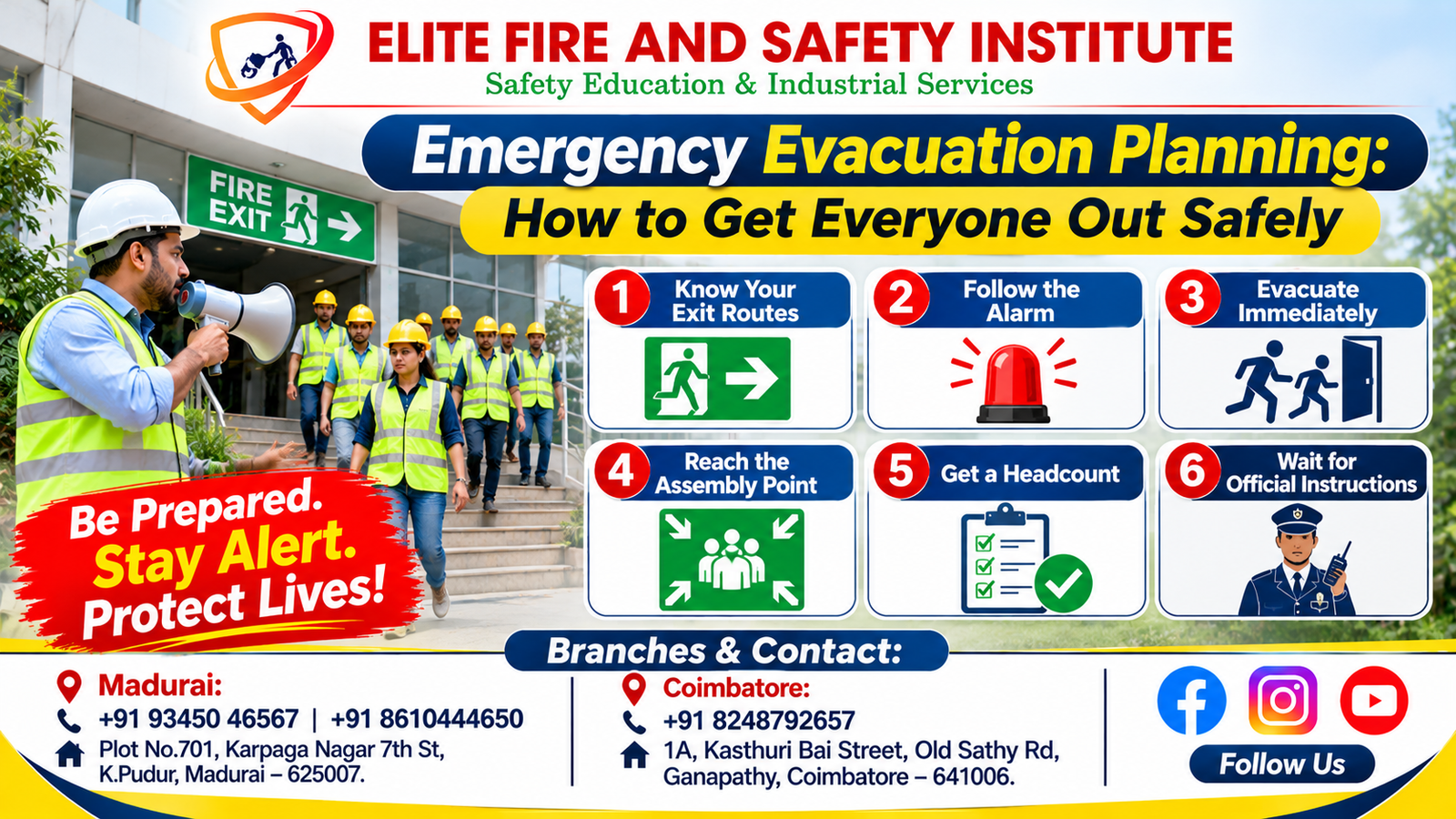
Emergency Evacuation Planning: How to Get Everyone Out Safely
Introduction
When a fire, gas leak or other emergency occurs, people may have only a short time to reach safety. A clear evacuation plan helps reduce confusion, directs people towards safe exits and ensures that assistance is considered for those who need it. The plan should reflect the actual building, hazards, staffing and people who use the premises.
Start with a Site Assessment
Identify likely emergencies, alarm methods, escape routes, exits, stairways, assembly points and areas where smoke or hazardous materials could affect escape. Consider shift work, visitors, contractors, people unfamiliar with the building and any temporary changes caused by construction or maintenance. Routes should be checked for obstructions and suitable signs.
Assign Clear Responsibilities
Depending on the size and risk of the workplace, appoint wardens or other trained personnel to support evacuation. Define who raises the alarm, contacts emergency services, guides people to exits, checks designated areas when safe and reports information at the assembly point. No one should be instructed to enter a dangerous area or delay their own escape to complete a check.
Communicate the Alarm
Everyone should recognise the alarm signal and understand what action it requires. Provide instructions in languages and formats workers can understand. If alarms or public-address systems are used, test and maintain them according to the applicable schedule. Include procedures for people who may not hear or see standard alerts.
Plan for People Who Need Assistance
Some occupants may need help because of mobility, sensory, medical or temporary limitations. Discuss arrangements respectfully in advance, identify safe procedures and train assigned helpers. Do not assume that one method suits everyone. Follow building-specific procedures and emergency-service guidance, particularly for lifts and refuge areas.
Choose and Maintain Assembly Points
Assembly points should be at a safe distance from the building, away from vehicle movement and emergency-service access routes. They should be easy to identify and suitable for expected numbers. Staff should know how attendance is checked and how missing persons are reported to emergency responders. A roll call must not delay evacuation.
Conduct Drills and Learn from Them
Drills should be planned to reflect workplace risks and legal requirements. Observe evacuation time, congestion, alarm audibility, route clarity and whether people follow instructions. After each drill, collect feedback, record findings and assign corrective actions. A drill is useful only if the organisation learns from it.
What Employees Should Do
On hearing the alarm, stop work safely if this can be done without delay, leave belongings behind, use the designated route and follow trained wardens’ instructions. Do not use lifts unless the building’s emergency procedure specifically permits a designated evacuation lift. Never return to the building until authorised by emergency responders or responsible officials.
Common Planning Mistakes
Frequent weaknesses include blocked exits, outdated contact lists, unmarked assembly points, inadequate visitor procedures, drills that exclude night shifts and unclear support arrangements. Another mistake is assuming that a written plan alone guarantees readiness. People need to understand and practise their roles.
Training and Review
Review the plan after changes to the building, occupancy, work process or hazards, and after drills or real events. Keep emergency contacts and diagrams current. Fire and safety training can help staff recognise hazards and practise appropriate response. Elite Fire and Safety Institute can be contacted to enquire about relevant training programmes.
Conclusion
A good evacuation plan is clear, practical, inclusive and regularly tested. Its main objective is to move people to safety—not to protect property or finish tasks. Strong planning, suitable alarms, clear routes and repeated practice can make a critical difference during an emergency.
Branches & Contact:
Madurai:
+91 93450 46567 +91 8610444650
Plot No.701, Karpaga Nagar 7th St, K.Pudur, Madurai – 625007.
Coimbatore:
+91 8248792657
1A, Kasthuri Bai Street, Old Sathy Rd, Ganapathy, Coimbatore – 641006.