

NEBOSH course for oil and gas Jobs
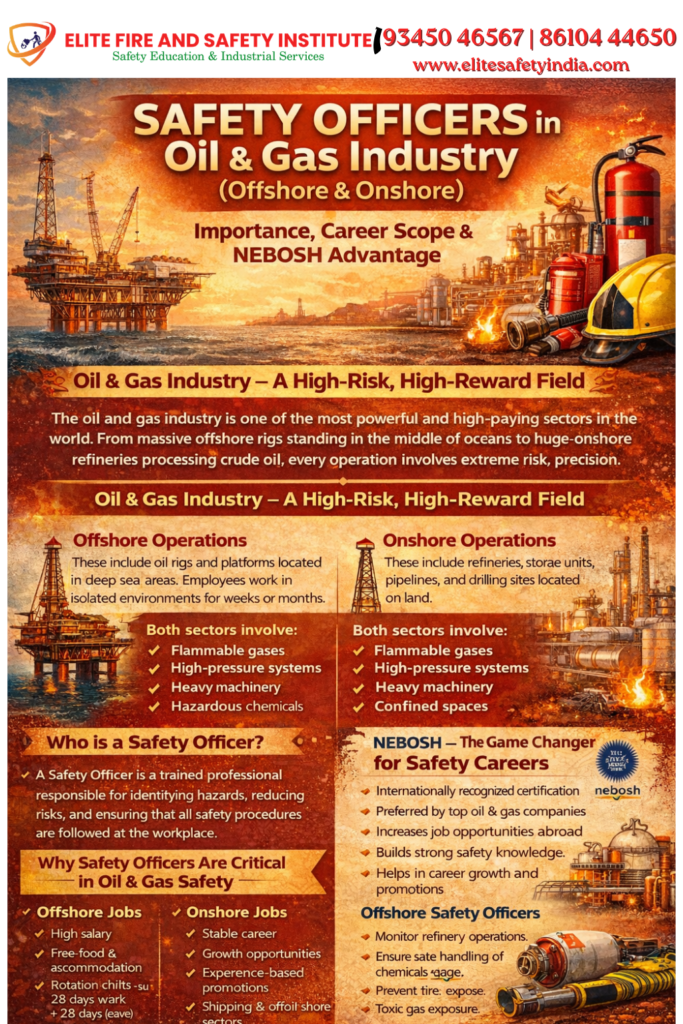
The oil and gas industry is one of the most powerful and high-paying sectors in the world. From massive offshore rigs standing in the middle of oceans to huge onshore refineries processing crude oil, every operation involves extreme risk, precision, and responsibility.
In this high-risk environment, one role stands like a shield between danger and safety — the Safety Officer.
Today, companies are not just hiring workers. They are actively looking for NEBOSH-certified Safety Officers who can manage risks, save lives, and protect billion-dollar assets.
If you are planning to build a career in safety, especially in oil and gas, this field offers high salary, global demand, and long-term career growth.
Oil & Gas Industry – A High-Risk, High-Reward Field
Oil and gas operations are divided into two major sectors:
Offshore Operations
These include oil rigs and platforms located in deep sea areas. Employees work in isolated environments for weeks or months.
Onshore Operations
These include refineries, storage units, pipelines, and drilling sites located on land.
Both sectors involve:
- Flammable gases
- High-pressure systems
- Heavy machinery
- Hazardous chemicals
- Confined spaces
Even a small mistake can cause explosion, fire, or environmental disaster. That is why Safety Officers are considered one of the most important professionals in this industry.
Who is a Safety Officer?
A Safety Officer is a trained professional responsible for identifying hazards, reducing risks, and ensuring that all safety procedures are followed at the workplace.
In oil companies, especially offshore and onshore, Safety Officers are not optional — they are mandatory.
With qualifications like NEBOSH (National Examination Board in Occupational Safety and Health), candidates gain international recognition and job opportunities across countries like UAE, Qatar, Saudi Arabia, and more.
Why Safety Officers Are Critical in Oil Companies
1. Prevention of Accidents
Oil and gas sites are accident-prone areas. Safety Officers:
- Identify potential hazards before they become dangerous
- Implement control measures
- Monitor risky operations
Their presence reduces chances of:
- Fire accidents
- Gas leaks
- Explosions
- Equipment failure
2. Life-Saving Responsibility
Every worker on site depends on safety systems. Safety Officers ensure:
- Workers follow safety procedures
- PPE (helmet, gloves, shoes, etc.) is properly used
- Unsafe acts are stopped immediately
They are directly responsible for saving human lives.
3. Emergency Handling Experts
In offshore and onshore industries, emergencies can occur anytime.
Safety Officers are trained to handle:
- Fire outbreaks
- Oil spills
- Blowouts
- Toxic gas exposure
They plan evacuation, conduct mock drills, and take quick decisions during critical situations.
NEBOSH – The Game Changer for Safety Careers
If you want to enter oil and gas industry as a Safety Officer, NEBOSH certification is one of the most demanded qualifications.
Why NEBOSH is Important?
- Internationally recognized certification
- Preferred by top oil and gas companies
- Increases job opportunities abroad
- Builds strong safety knowledge
- Helps in career growth and promotions
Many offshore companies shortlist candidates only if they have NEBOSH qualification.
Offshore Safety Officers – Special Importance
Working offshore is more challenging compared to onshore.
Why Safety Officers are crucial offshore:
- Remote location with limited medical facilities
- Difficult evacuation during emergencies
- Harsh weather conditions
- Continuous operations (24/7)
Safety Officers ensure that offshore platforms operate safely without any major incidents.
Onshore Safety Officers – Industrial Backbone
Onshore sites may look safer than offshore, but risks are still high.
Safety Officers in onshore:
- Monitor refinery operations
- Ensure safe handling of chemicals
- Prevent fire hazards
- Control industrial risks
They protect both workers and nearby communities.
Salary and Career Opportunities in Oil & Gas Safety
One of the biggest attractions for students is the salary package.
Offshore Jobs
- High salary (very attractive packages)
- Free food and accommodation
- Rotation shifts (e.g., 28 days work + 28 days leave)
- International exposure
Onshore Jobs
- Stable career
- Growth opportunities
- Experience-based promotions
With NEBOSH certification, candidates can work in:
- Oil & gas companies
- Construction industries
- Power plants
- Manufacturing industries
- Shipping and offshore sectors
Why Students Should Choose Safety Career
Safety field is not just a job — it is a professional career with respect and responsibility.
Benefits include:
- High demand worldwide
- Job security
- Good salary growth
- Opportunity to work abroad
- Respect in workplace
- Leadership role
Students who complete NEBOSH course can quickly enter this field and build a successful future.
Skills Required to Become a Safety Officer
To succeed in oil and gas safety, candidates need:
- Good observation skills
- Knowledge of safety standards
- Communication skills
- Problem-solving ability
- Leadership qualities
NEBOSH training helps students develop all these skills.
Future Scope of Safety Officers
The demand for Safety Officers is increasing every year.
Reasons:
- Strict safety regulations
- Increase in industrial projects
- Focus on worker safety
- Environmental protection laws
Oil and gas companies are continuously hiring qualified NEBOSH Safety Officers.