

Basic Fire Fighting Techniques Everyone Should Know
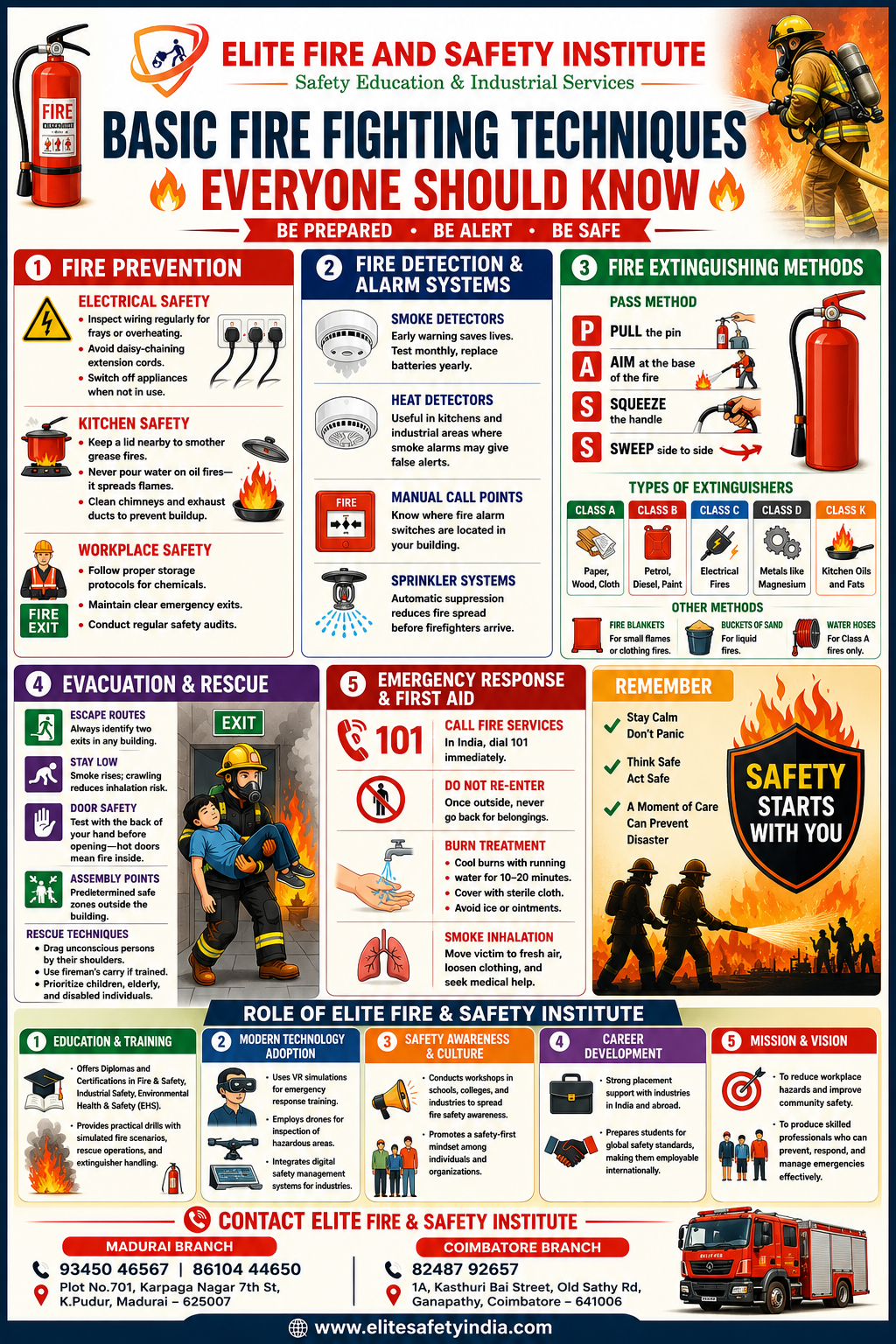
1. Fire Prevention (Stopping fires before they start)
- Electrical Safety:
- Inspect wiring regularly for frays or overheating.
- Avoid daisy-chaining extension cords.
- Switch off appliances when not in use.
- Kitchen Safety:
- Keep a lid nearby to smother grease fires.
- Never pour water on oil fires—it spreads flames.
- Clean chimneys and exhaust ducts to prevent buildup.
- Workplace Safety:
- Follow proper storage protocols for chemicals.
- Maintain clear emergency exits.
- Conduct regular safety audits.
2. Fire Detection & Alarm Systems
- Smoke Detectors: Early warning saves lives. Test monthly, replace batteries yearly.
- Heat Detectors: Useful in kitchens and industrial areas where smoke alarms may give false alerts.
- Manual Call Points: Know where fire alarm switches are located in your building.
- Sprinkler Systems: Automatic suppression reduces fire spread before firefighters arrive.
3. Fire Extinguishing Methods
- Using Extinguishers (PASS method):
- Pull the pin
- Aim at the base of the fire
- Squeeze the handle
- Sweep side to side
- Types of Extinguishers:
- Class A: Paper, wood, cloth
- Class B: Petrol, diesel, paint
- Class C: Electrical fires
- Class D: Metals like magnesium
- Class K: Kitchen oils and fats
- Other Methods:
- Fire blankets for small flames or clothing fires.
- Buckets of sand for liquid fires.
- Water hoses for Class A fires only.
4. Evacuation & Rescue
- Escape Routes: Always identify two exits in any building.
- Stay Low: Smoke rises; crawling reduces inhalation risk.
- Door Safety: Test with the back of your hand before opening—hot doors mean fire inside.
- Assembly Points: Predetermined safe zones outside the building.
- Rescue Techniques:
- Drag unconscious persons by their shoulders.
- Use fireman’s carry if trained.
- Prioritize children, elderly, and disabled individuals.
5. Emergency Response & First Aid
- Call Fire Services: In India, dial 101 immediately.
- Do Not Re-enter: Once outside, never go back for belongings.
- Burn Treatment:
- Cool burns with running water for 10–20 minutes.
- Cover with sterile cloth.
- Avoid ice or ointments.
- Smoke Inhalation: Move victim to fresh air, loosen clothing, and seek medical help.
Role of Elite Fire & Safety Institute
The Elite Fire & Safety Institute in Tamil Nadu is a specialized training hub for fire and industrial safety. Its role is multi-dimensional:
1. Education & Training
- Offers Diplomas and Certifications in Fire & Safety, Industrial Safety, Environmental Health & Safety (EHS).
- Provides practical drills with simulated fire scenarios, rescue operations, and extinguisher handling.
2. Modern Technology Adoption
- Uses VR simulations for emergency response training.
- Employs drones for inspection of hazardous areas.
- Integrates digital safety management systems for industries.
3. Safety Awareness & Culture
- Conducts workshops in schools, colleges, and industries to spread fire safety awareness.
- Promotes a safety-first mindset among individuals and organizations.
4. Career Development
- Strong placement support with industries in India and abroad.
- Prepares students for global safety standards, making them employable internationally.
5. Mission & Vision
- To reduce workplace hazards and improve community safety.
- To produce skilled professionals who can prevent, respond, and manage emergencies effectively.
CONTACT US
Madurai:
+91 93450 46567 +91 8610444650
Plot No.701, Karpaga Nagar 7th St, K.Pudur, Madurai – 625007.
Coimbatore:
+91 8248792657
1A, Kasthuri Bai Street, Old Sathy Rd, Ganapathy, Coimbatore – 641006.