


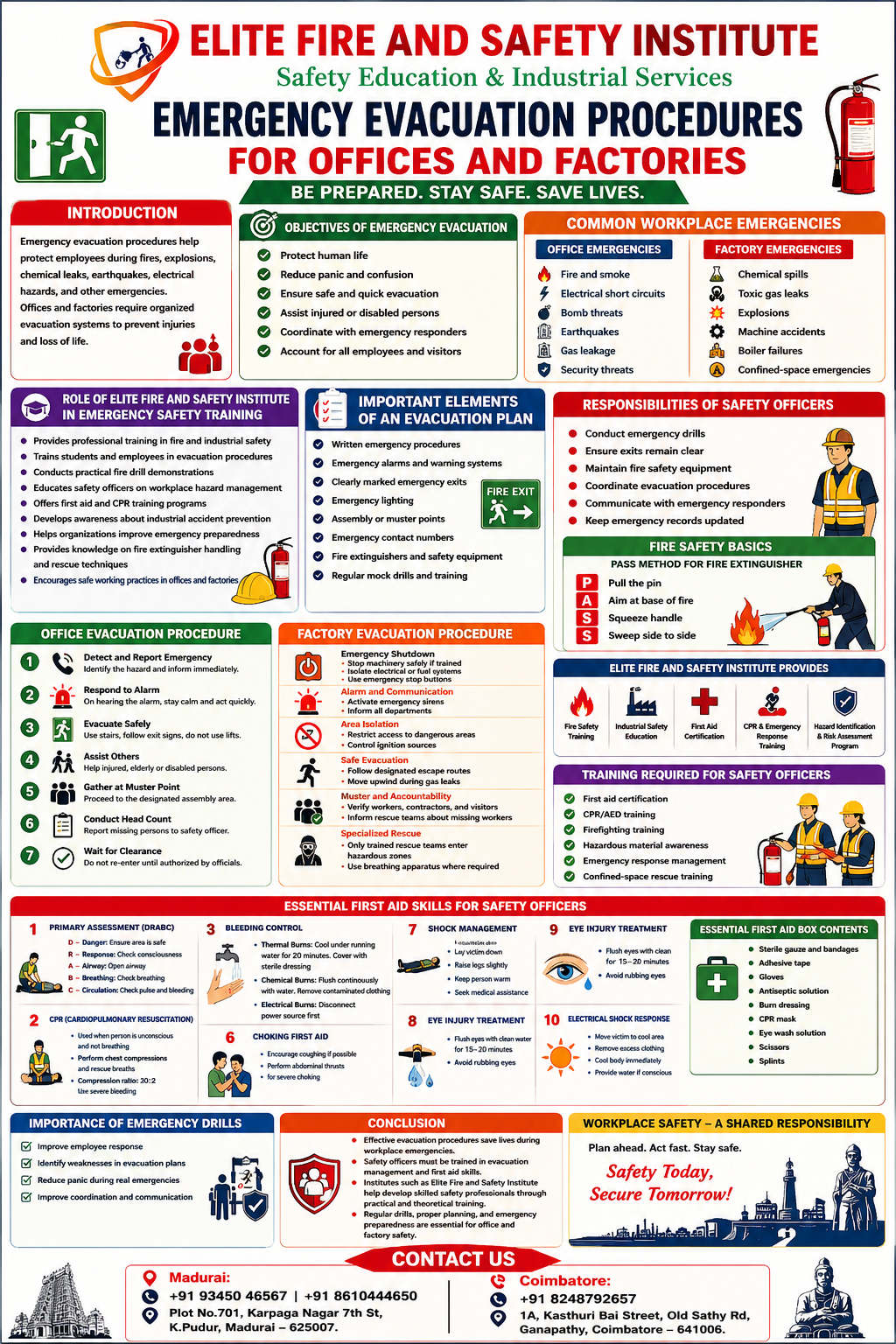
Emergency Evacuation Procedures for Offices and Factoriesntroduction
- Emergency evacuation procedures help protect employees during fires, explosions, chemical leaks, earthquakes, electrical hazards, and other emergencies.
- Offices and factories require organized evacuation systems to prevent injuries and loss of life.
Objectives of Emergency Evacuation
- Protect human life
- Reduce panic and confusion
- Ensure safe and quick evacuation
- Assist injured or disabled persons
- Coordinate with emergency responders
- Account for all employees and visitors
Common Workplace Emergencies Office Emergencies
- Fire and smoke
- Electrical short circuits
- Bomb threats
- Earthquakes
- Gas leakage
- Security threats
Factory Emergencies
- Chemical spills
- Toxic gas leaks
- Explosions
- Machine accidents
- Boiler failures
- Confined-space emergencies
Role of Elite Fire and Safety Institute in Emergency Safety Training
- Provides professional training in fire and industrial safety
- Trains students and employees in emergency evacuation procedures
- Conducts practical fire drill demonstrations
- Educates safety officers on workplace hazard management
- Offers first aid and CPR training programs
- Develops awareness about industrial accident prevention
- Helps organizations improve emergency preparedness
- Provides knowledge on fire extinguisher handling and rescue techniques
- Encourages safe working practices in offices and factories
Important Elements of an Evacuation Plan
- Written emergency procedures
- Emergency alarms and warning systems
- Clearly marked emergency exits
- Emergency lighting
- Assembly or muster points
- Emergency contact numbers
- Fire extinguishers and safety equipment
- Regular mock drills and training
- Detect and Report Emergency
- Respond to Alarm
- Evacuate Safely
- Assist Others
- Gather at Muster Point
- Conduct Head Count
- Wait for Clearance
Factory Evacuation Procedure
- Emergency Shutdown
- Stop machinery safely if trained
- Isolate electrical or fuel systems
- Use emergency stop buttons
2. Alarm and Communication
- Activate emergency sirens
- Inform all departments
3. Area Isolation
Restrict access to dangerous areas
- Control ignition sources
4. Safe Evacuation
- Follow designated industrial escape routes
- Move upwind during gas leaks
5. Muster and Accountability
- Verify workers, contractors, and visitors
- Inform rescue teams about missing workers
6. Specialized Rescue
- Only trained rescue teams enter hazardous zones
- Use breathing apparatus where required
Responsibilities of Safety Officers
- Conduct emergency drills
- Ensure exits remain clear
- Maintain fire safety equipment
- Coordinate evacuation procedures
- Communicate with emergency responders
- Keep emergency records updated
Fire Safety Basics
PASS Method for Fire Extinguisher
- Pull the pin
- Aim at base of fire
- Squeeze handle
- Sweep side to side
Elite Fire and Safety Institute provides:
- Fire safety training
- Industrial safety education
- First aid certification
- CPR and emergency response training
- Hazard identification and risk assessment program
Essential First Aid Skills for Safety Officers
Primary Assessment (DRABC)
D – Danger: Ensure area is safe
- R – Response: Check consciousness
- A – Airway: Open airway
- B – Breathing: Check breathing
- C – Circulation: Check pulse and bleeding
2. CPR (Cardiopulmonary Resuscitation)
- Used when person is unconscious and not breathing
- Perform chest compressions and rescue breaths
- Compression ratio: 30:2
- Use AED if available
3. Bleeding Control
- Apply direct pressure
- Use clean dressing or bandage
- Elevate injured area if possible
- Use tourniquet only for severe bleeding
4. Burn Treatment Thermal Burns
- Cool under running water for: 20\ \text{minutes}
- Cover with sterile dressing
Chemical Burns
- Flush continuously with water
- Remove contaminated clothing
Electrical Burns
- Disconnect power source first
5. Fracture Management
- Immobilize injured limb
- Use splints if available
- Avoid unnecessary movement
6. Choking First Aid
- Encourage coughing if possible
- Perform abdominal thrusts for severe choking
7. Shock Management
- Lay victim down
- Raise legs slightly
- Keep person warm
- Seek medical assistance
8. Eye Injury Treatment
- Flush eyes with clean water for: 15\text{–}20\ \text{minutes}
- Avoid rubbing eyes
9. Heat Stroke Response
- Move victim to cool area
- Remove excess clothing
- Cool body immediately
- Provide water if conscious
10. Electrical Shock Response
- Do not touch victim until power is isolated
- Check breathing and pulse
- Start CPR if necessary
Essential First Aid Box Contents
- Sterile gauze and bandages
- Adhesive tape
- Gloves
- Antiseptic solution
- Burn dressing
- CPR mask
- Eye wash solution
- Scissors
- Splints
Training Required for Safety Officers
- First aid certification
- CPR/AED training
- Firefighting training
- Hazardous material awareness
- Emergency response management
- Confined-space rescue training
Importance of Emergency Drills
- Improve employee response
- Identify weaknesses in evacuation plans
- Reduce panic during real emergencies
- Improve coordination and communication
Conclusion
- Effective evacuation procedures save lives during workplace emergencies.
- Safety officers must be trained in evacuation management and first aid skills.
- Institutes such as Elite Fire and Safety Institute help develop skilled safety professionals through practical and theoretical training.
- Regular drills, proper planning, and emergency preparedness are essential for office and factory safety.
CONTACT US
Madurai:
+91 93450 46567 +91 8610444650
Plot No.701, Karpaga Nagar 7th St, K.Pudur, Madurai – 625007.
Coimbatore:
+91 8248792657
1A, Kasthuri Bai Street, Old Sathy Rd, Ganapathy, Coimbatore – 641006.