

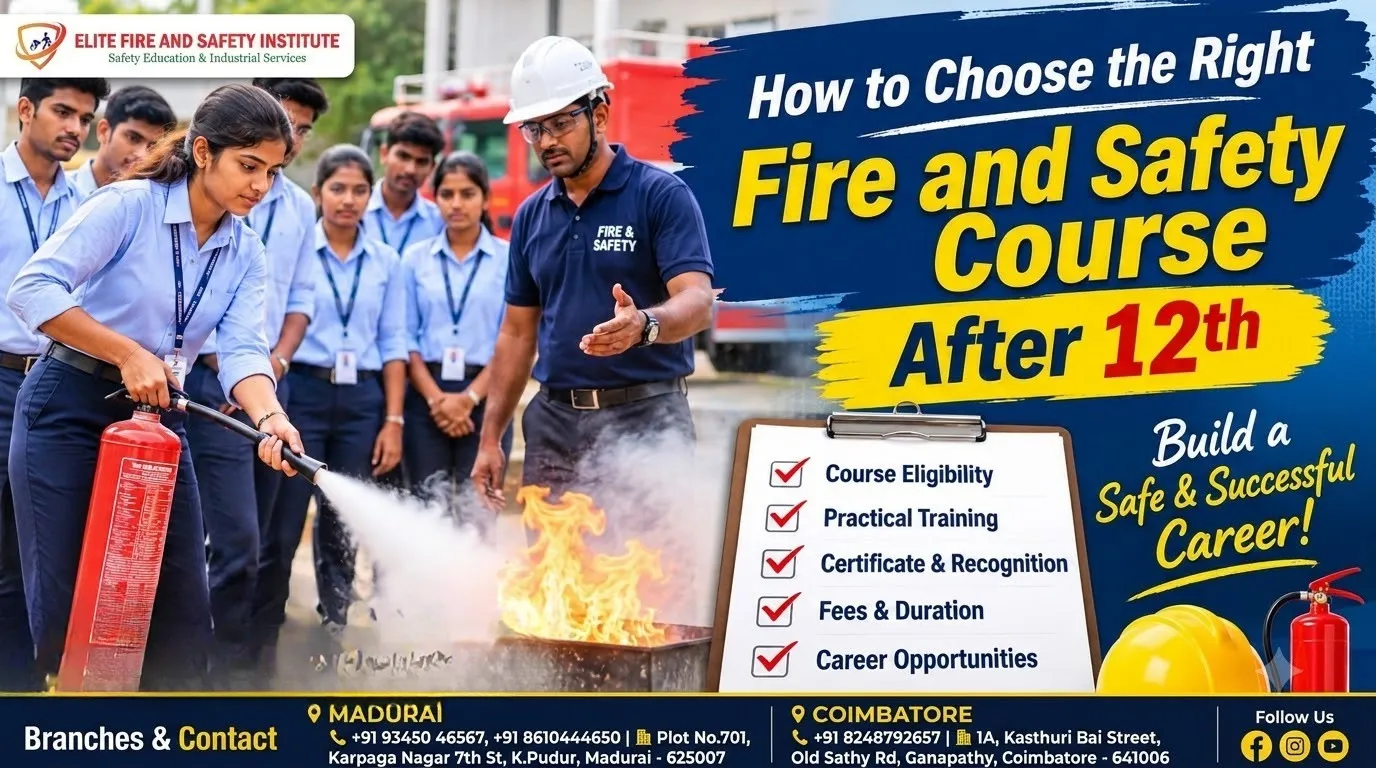
How to Choose the Right Fire and Safety Course After 12th
A checklist for comparing training, course claims, and career goals
Introduction
Completing Class 12 can be a useful point to explore a career in fire and safety. However, courses differ in duration, entry requirements, practical content, assessment, and the organisations issuing certificates. A course that suits one learner may not meet another learner’s goal. Before paying fees, students should compare the course with the type of work they hope to pursue and verify the claims made by the training provider.
Start With a Career Goal
Think about the work that interests you: industrial safety, construction, fire prevention, emergency response, facilities, or a broader health and safety role. Then review job advertisements for entry-level positions in that area. Note the education, experience, technical knowledge, and certificates requested. This gives you a more reliable starting point than choosing a course only because its title sounds impressive.
Check Eligibility and Course Duration
Ask for the entry criteria in writing, including the minimum education level, age requirements if any, documents needed, and whether previous experience is expected. Confirm the total duration, class schedule, practical sessions, assessment format, attendance rules, and any additional costs. Make sure the course is realistic for your time, travel, accommodation, and budget.
Understand the Certificate
Ask who issues the certificate and what the stated approval, affiliation, or accreditation means. Request the exact awarding-body name and a way to verify the claim independently. Terms such as “approved,” “recognised,” and “international” should not be accepted without clarification. A certificate may be useful for some employers but not automatically accepted by every employer, industry, or country.
Look Beyond Classroom Theory
Fire and safety work involves real hazards and practical decisions. Ask whether the course includes demonstrations or exercises related to fire extinguishers, evacuation, hazard identification, risk assessment, PPE, incident reporting, and emergency procedures. Find out how practical activities are supervised and assessed. A course brochure should explain what learners will actually be able to practise, not only list broad subjects.
Evaluate Trainers and Learning Support
Ask about trainer experience, class size, learning materials, doubt-clearing support, and the method used to assess understanding. If possible, speak to former students and ask about the quality of teaching and practical exposure. Be cautious of providers that guarantee a job or overseas placement without clear written conditions. Request details of any career guidance or placement support and what it does—and does not—include.
Compare the Total Cost
Compare the complete fee rather than only the advertised price. Check whether registration, examination, certificate issue, equipment, uniforms, travel, hostel, or resit charges are included. Ask for the refund and cancellation policy before paying. Keep receipts and copies of the written course terms. A transparent provider should be willing to explain the total cost and the services included.
Questions to Ask Before Enrolling
Before making a decision, ask: What is the full syllabus? Who issues the certificate? How can the certificate claim be verified? How many practical sessions are included? What assessments must I pass? What extra charges may apply? What types of jobs does this course prepare me to apply for? Are there written conditions for any placement assistance? Clear answers help you make a more informed choice.
Exploring Elite Fire and Safety Institute
Students considering Elite Fire and Safety Institute should contact the institute directly for current course options, entry requirements, fees, schedules, practical training details, and certificate information. Ask for written answers and compare them with your target job requirements. The best course is the one that fits your goals and provides credible learning—not simply the one with the strongest promotional claims.
Conclusion
Choosing a fire and safety course after Class 12 deserves careful research. Start with a realistic career target, check course content and certificate details, assess the practical training, and understand the full cost. A well-informed decision can help you build relevant knowledge and prepare for the next step in your career.
Branches & Contact:
Madurai:
+91 93450 46567 +91 8610444650
Plot No.701, Karpaga Nagar 7th St, K.Pudur, Madurai – 625007.
Coimbatore:
+91 8248792657
1A, Kasthuri Bai Street, Old Sathy Rd, Ganapathy, Coimbatore – 641006.