

The Future of Fire and Safety Careers in India: Skills, Opportunities and Growth
Introduction
Fire and safety is no longer limited to keeping a fire extinguisher ready or responding after an accident. Across India, industries are paying greater attention to preventing incidents, protecting workers, maintaining equipment and meeting legal requirements. As factories, construction projects, hospitals, warehouses, hotels, energy facilities and infrastructure continue to develop, the need for trained safety professionals remains important. For students choosing a career, fire and safety can offer a practical path that combines technical knowledge, field experience and responsibility.
Why Fire and Safety Professionals Matter
A workplace incident can cause injuries, damage property, interrupt production and affect a company’s reputation. Safety professionals help identify hazards before they cause harm. Their responsibilities may include workplace inspections, risk assessments, toolbox talks, emergency planning, incident reporting, permit-to-work monitoring and checking whether workers use appropriate personal protective equipment (PPE). They also help employees understand safe work procedures and encourage a culture in which hazards are reported promptly.
Industries That Employ Safety Personnel
Career opportunities can be found in construction, manufacturing, oil and gas, power generation, logistics, healthcare, hospitality, food processing, chemical handling and facility management. Construction sites may require monitoring of work at height, lifting operations and excavation. Manufacturing plants need support with machine safety, fire prevention and emergency preparedness. Hospitals focus on evacuation, electrical safety and protection of patients. Warehouses must manage storage, traffic movement and fire-load risks. The duties and qualifications required differ by employer and location.
Skills Employers Look For
Technical qualifications are only one part of employability. Employers also value clear communication, accurate documentation, observation, teamwork and the confidence to raise concerns respectfully. A safety professional should be able to identify hazards, recommend practical controls, deliver short safety briefings and maintain inspection records. Computer skills are useful for preparing reports, tracking corrective actions and analysing incident trends. English communication can be particularly helpful when working with multinational teams or applying for overseas roles.
Courses, Certifications and Practical Learning
Students should select training that matches their education, career goal and the requirements of target employers. Before enrolling, verify the course syllabus, awarding body, recognition, assessment method, practical facilities and certificate status. A course title alone does not guarantee that a qualification is accepted for every job. Practical demonstrations, mock drills, site visits and supervised exercises can help learners connect classroom knowledge with real workplace conditions. Candidates should also learn relevant local laws and industry-specific standards.
Building a Career Step by Step
A realistic pathway begins with an appropriate course and a strong foundation in fire prevention, hazard identification, PPE, first aid awareness and emergency response. Learners can then seek internships, trainee roles or entry-level safety positions where they can develop practical experience under supervision. Keeping a record of training, projects and responsibilities helps when preparing a CV. As experience grows, professionals may specialise in areas such as construction safety, process safety, fire systems, auditing or environmental management.
Opportunities in India and Abroad
Some experienced professionals pursue work in other countries, but requirements vary widely. Employers may ask for specific qualifications, relevant industry experience, language skills, medical fitness or local approvals. Applicants should verify job offers, recruitment fees, visa arrangements and contract conditions through reliable channels. No training institute or qualification can guarantee employment or a particular salary. Researching real job descriptions is the best way to identify the skills and experience employers actually request.
How Training Institutes Can Support Students
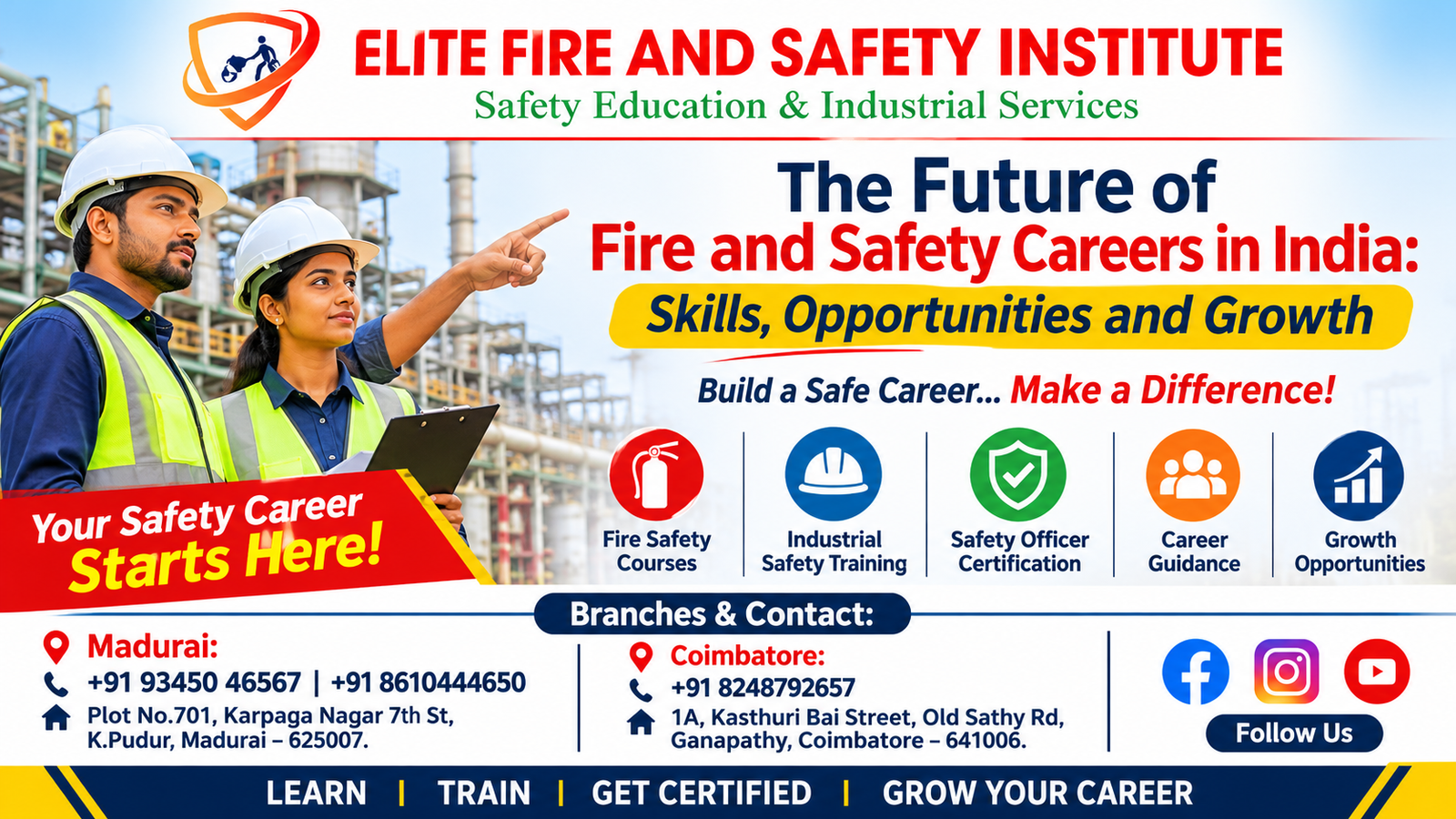
A good training provider should explain course outcomes clearly, provide suitable practical learning, support interview preparation and share realistic information about career routes. Students should ask about trainer experience, equipment, assessment standards, placement support and any additional fees before joining. At Elite Fire and Safety Institute, prospective learners can enquire about available fire and safety programmes and compare the course content with their intended career path before making a decision.
Conclusion
Fire and safety can be a meaningful career for people who are observant, disciplined and willing to keep learning. The strongest candidates combine relevant training with practical experience, communication skills and a genuine commitment to preventing harm. By researching employer requirements and choosing training carefully, students can take informed steps towards a career in workplace safety.
Branches & Contact:
Madurai:
+91 93450 46567 +91 8610444650
Plot No.701, Karpaga Nagar 7th St, K.Pudur, Madurai – 625007.
Coimbatore:
+91 8248792657
1A, Kasthuri Bai Street, Old Sathy Rd, Ganapathy, Coimbatore – 641006.