

Personal Protective Equipment (PPE): Choosing, Using and Maintaining It Correctly
Introduction
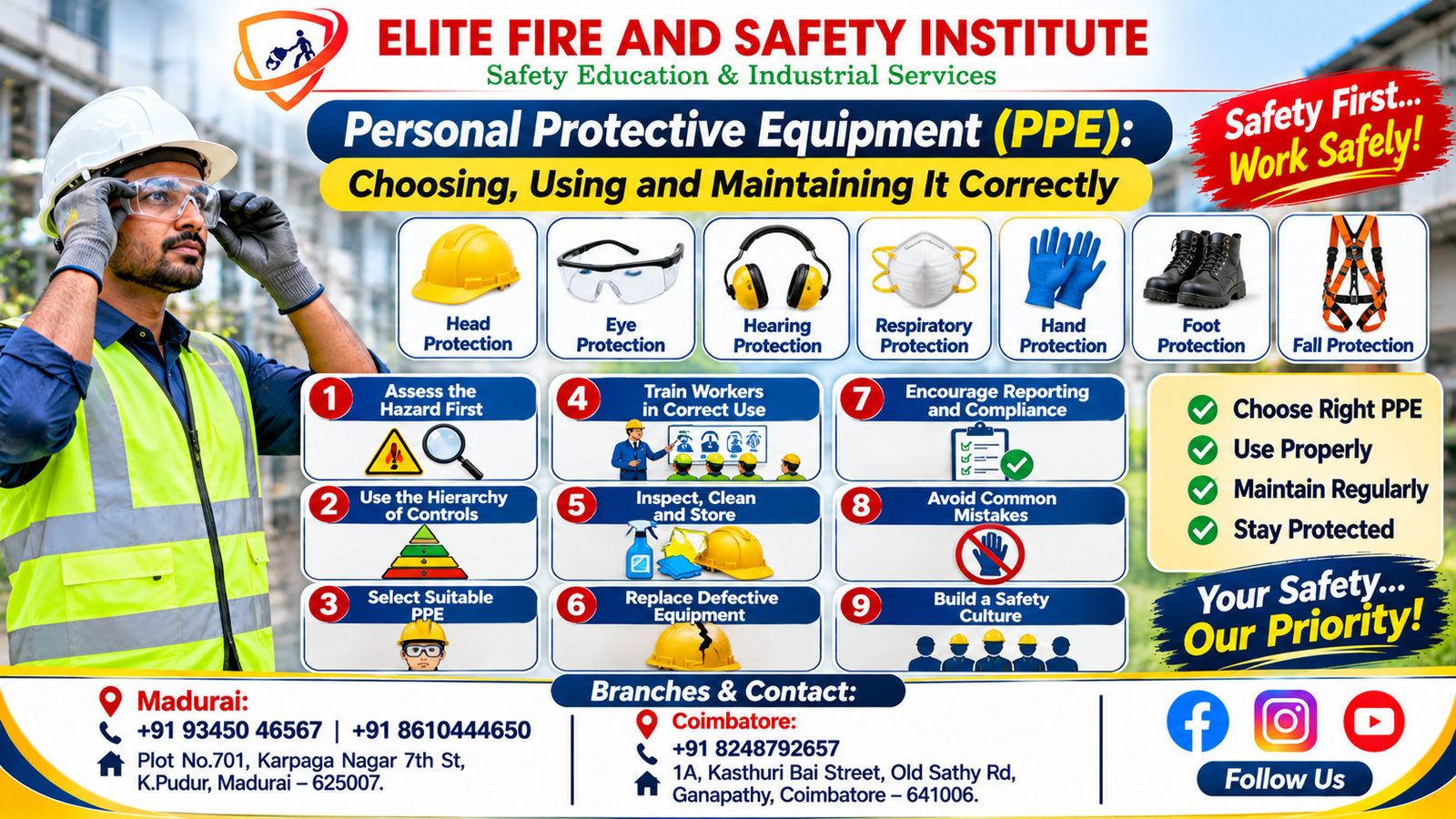
Personal protective equipment (PPE) helps reduce exposure to workplace hazards when it is selected and used correctly. Examples include helmets, safety footwear, gloves, eye protection, hearing protection, respirators and fall-protection equipment. However, PPE is not a substitute for removing a hazard or applying stronger controls. It should form part of a broader risk-control strategy.
Assess the Hazard First
Before selecting PPE, identify the task, the hazard, how exposure may occur and who may be affected. A chemical splash, flying particle, falling object, high noise level and fall from height require different forms of protection. Use a suitable risk assessment and consult product safety information and relevant standards. Generic equipment may not protect against every hazard.
Use the Hierarchy of Controls
Where practicable, eliminate the hazard, substitute a safer material or process, and apply engineering controls such as guarding or ventilation. Administrative controls can include safe procedures, training and restricted access. PPE is often used alongside these measures or where risks remain. For example, safety glasses should not replace a machine guard that is required to control flying particles.
Select Suitable PPE
PPE must match the hazard, fit the wearer and be compatible with other equipment. Gloves suitable for one chemical may not resist another. Respirators require appropriate selection, fit testing where required, training and a suitable respiratory-protection programme. Fall-arrest equipment must be compatible, inspected and used with a planned rescue procedure. Follow manufacturer instructions and local requirements.
Train Workers in Correct Use
Employees should know when PPE is required, how to put it on and remove it, its limitations, how to inspect it and how to report defects. Training should include practical demonstrations. Workers should understand that damaged, contaminated or incorrectly fitted equipment may not provide the expected protection.
Inspect, Clean and Store
Check PPE before use and at the intervals specified by the manufacturer or applicable rules. Look for cracks, worn straps, damaged buckles, contaminated surfaces and expired components. Clean equipment using approved methods and store it away from heat, sunlight, chemicals and physical damage as directed. Do not modify equipment without authorisation.
Replace Defective Equipment
Remove defective PPE from service and follow the workplace process for replacement. Do not rely on tape, improvised repairs or another person’s judgement when a critical component is damaged. Keep inspection records for equipment where required, particularly specialised fall-protection or respiratory equipment.
Encourage Reporting and Compliance
Workers may avoid PPE if it is uncomfortable, poorly sized or unsuitable for the task. Supervisors should listen to concerns, provide appropriate sizes and investigate whether the work method can be improved. PPE compliance should be supported by clear instructions, visible leadership and fair enforcement.
Common Mistakes
Typical mistakes include wearing the wrong gloves, using scratched eye protection, sharing poorly maintained respirators, ignoring fit, using a hard hat beyond its service life and assuming that all safety footwear protects against the same risks. Another common error is wearing PPE without understanding the hazard it is intended to control.
Training and Safety Culture
PPE works best when management provides suitable equipment, employees receive training and supervisors check that controls remain effective. Regular toolbox talks and inspections can reinforce good habits. At Elite Fire and Safety Institute, students can enquire about fire and safety programmes that introduce workplace hazard awareness and safe practices.
Conclusion
Correct PPE use begins with risk assessment, careful selection, proper fit, training and maintenance. It should be combined with higher-level controls whenever possible. A workplace that treats PPE as part of a complete safety system is better placed to prevent injuries and protect employees.
Branches & Contact:
Madurai:
+91 93450 46567 +91 8610444650
Plot No.701, Karpaga Nagar 7th St, K.Pudur, Madurai – 625007.
Coimbatore:
+91 8248792657
1A, Kasthuri Bai Street, Old Sathy Rd, Ganapathy, Coimbatore – 641006.